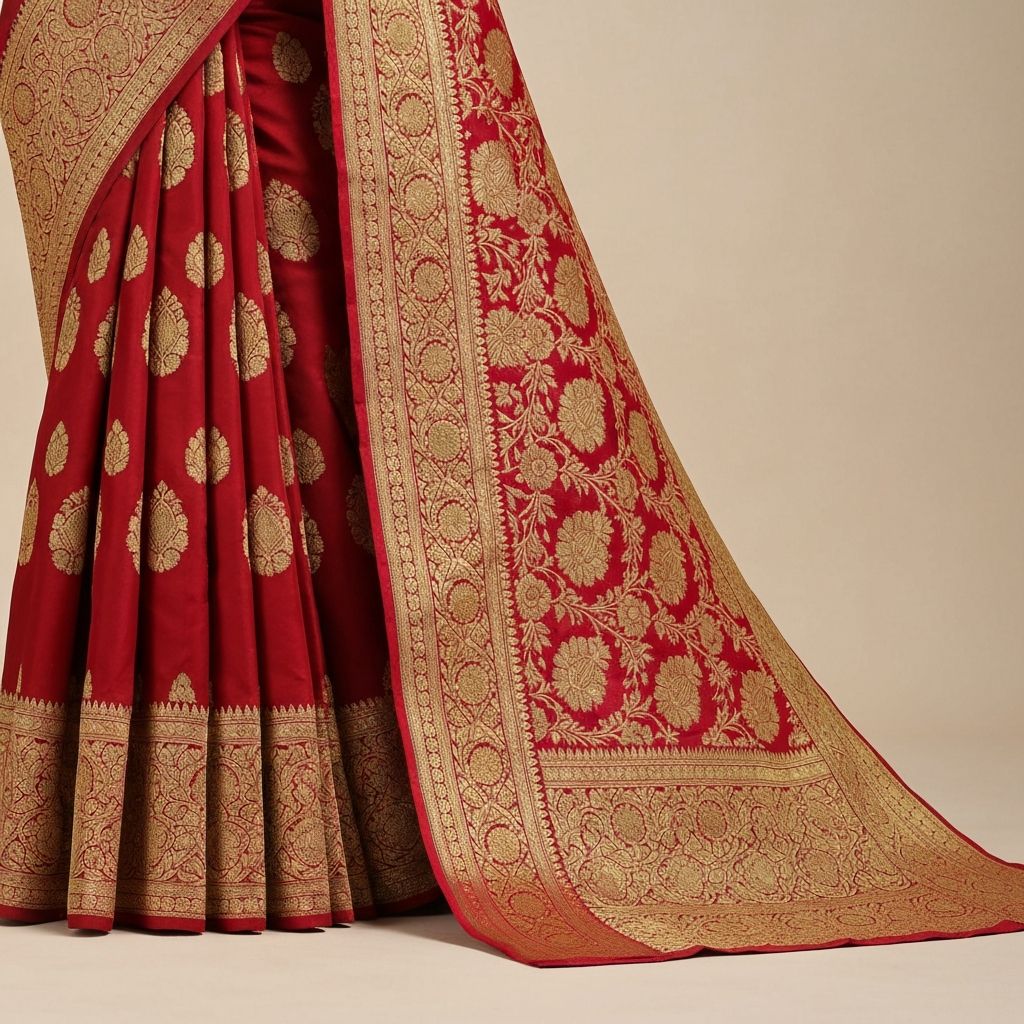
Banarasi Silk
Woven with gold threads and centuries of devotion in the sacred city of Varanasi — India's most coveted bridal silk.
Origin
Varanasi, Uttar Pradesh
History
500+ Years
Technique
Jacquard Handloom
Recognition
GI Tagged (2009)
In the narrow, labyrinthine lanes of Varanasi — one of the world's oldest living cities — a tradition of extraordinary beauty has thrived for over five centuries. Banarasi silk sarees, with their shimmering silk base and lavish gold and silver brocade, are considered the zenith of Indian textile artistry. They are passed down as heirlooms, gifted at weddings, and worn on the most significant moments of a woman's life.
The weaving tradition was elevated during the Mughal era, when Persian motifs — elaborate floral jaals, arabesque vines, and intricate kalga patterns — were absorbed into the existing craft and given an Indian soul. The result was a vocabulary of design that remains largely unchanged today: timeless, regal, and unmistakably Banarasi.
A single Banarasi saree can take anywhere from 15 days to 6 months to weave, depending on the intricacy of the brocade. Master weavers — called bunkar — work on pit looms or frame looms, threading thousands of bobbins by hand, following punch-card designs that predate modern computing by centuries.
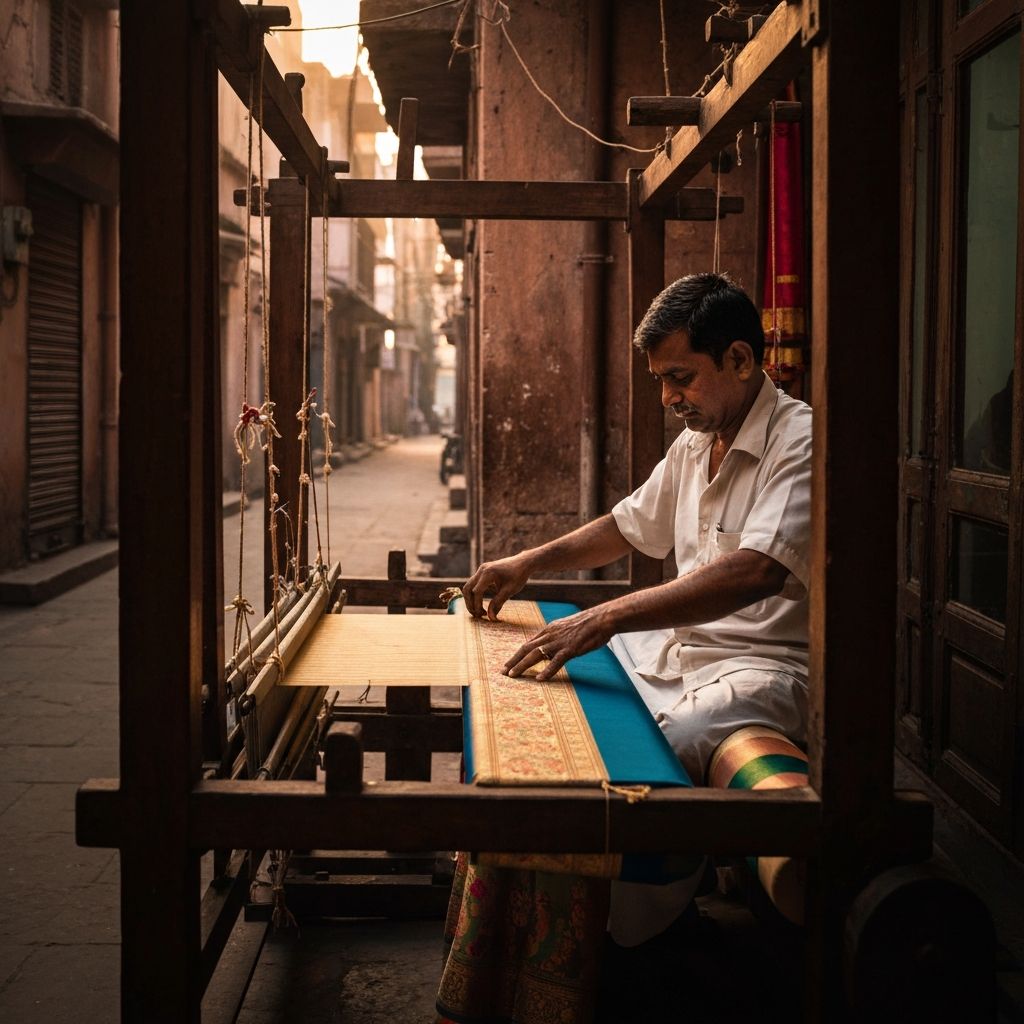
A Banarasi bunkar threading gold zari on a traditional pit loom in old Varanasi
Distinctive Features
Pure Silk Base
Finest mulberry silk gives a luminous, smooth drape
Zari Brocade
Real gold and silver threads woven into intricate patterns
Jacquard Weaving
Punch-card controlled loom for complex brocade designs
Mughal Motifs
Floral jaals, kalgas, and mehrab arches inspired by Mughal art
Butidaar & Jangla
Scattered motif and all-over vine-and-leaf patterns
Tanchoi Technique
Satin-based weave with coloured weft patterns on the face
Varieties of Banarasi Silk
Katan
Pure silk warp and weft, the finest and heaviest variety
Organza (Kora)
Sheer silk with zari, lighter and translucent
Shattir
Extra weft threads create a thick embossed texture
Tanchoi
Satin base with multi-coloured weft, no extra threads
Vaskat
Extra warp brocade with motifs on both sides
Cutwork (Jamdani)
Open-weave technique with patterns that appear cut out
Traditional Motifs
Identifying an Authentic Banarasi
- Look for the Silk Mark label certifying pure silk content
- A GI-tagged Banarasi will have a hologram sticker with registration details
- Real zari has a metallic shine that does not tarnish quickly; test by rubbing — pure zari leaves no colour
- The reverse of the saree shows loose threads on brocade areas (called 'karchob') — machine-made copies have a clean back
- Buy from trusted government emporiums, Varanasi cooperatives, or certified sellers