Textile Arts of India
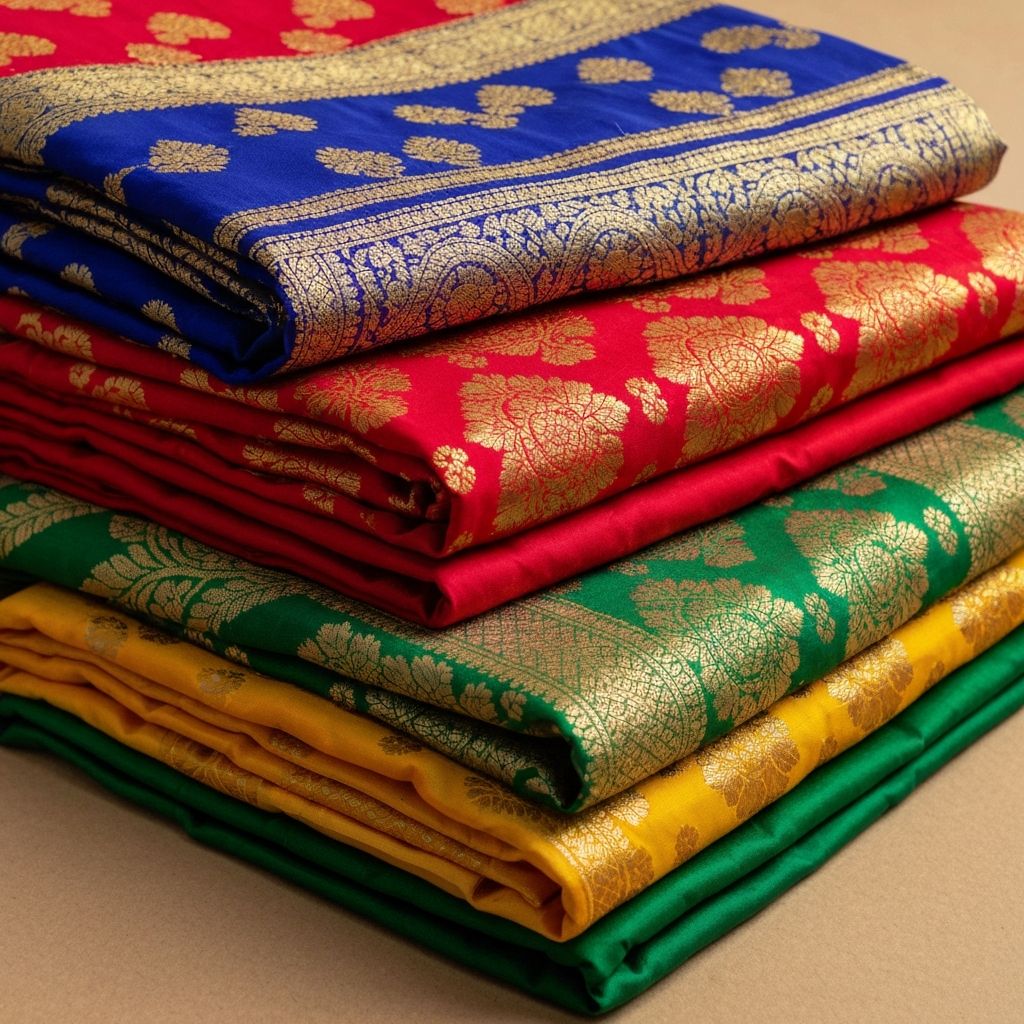
Threads of tradition woven through millennia - from shimmering silks to intricate embroidery, each fabric tells a story.
Weaving Centers
50+ Distinct Traditions
Heritage
5000+ Years
Artisans
4.3 Million Weavers
GI Tags
100+ Protected
India's textile heritage is among the richest in the world, with evidence of cotton cultivation and weaving dating back to the Indus Valley Civilization (3000 BCE). For centuries, Indian textiles were prized commodities on ancient trade routes, with muslin from Dhaka so fine it was called "woven air" and silk from Varanasi adorning royalty across continents.
Today, India remains the world's second-largest textile producer, with millions of artisans preserving techniques passed down through generations. Each region has developed distinctive styles reflecting local materials, climate, and cultural traditions - from the tropical silks of the South to the woolen shawls of Kashmir.
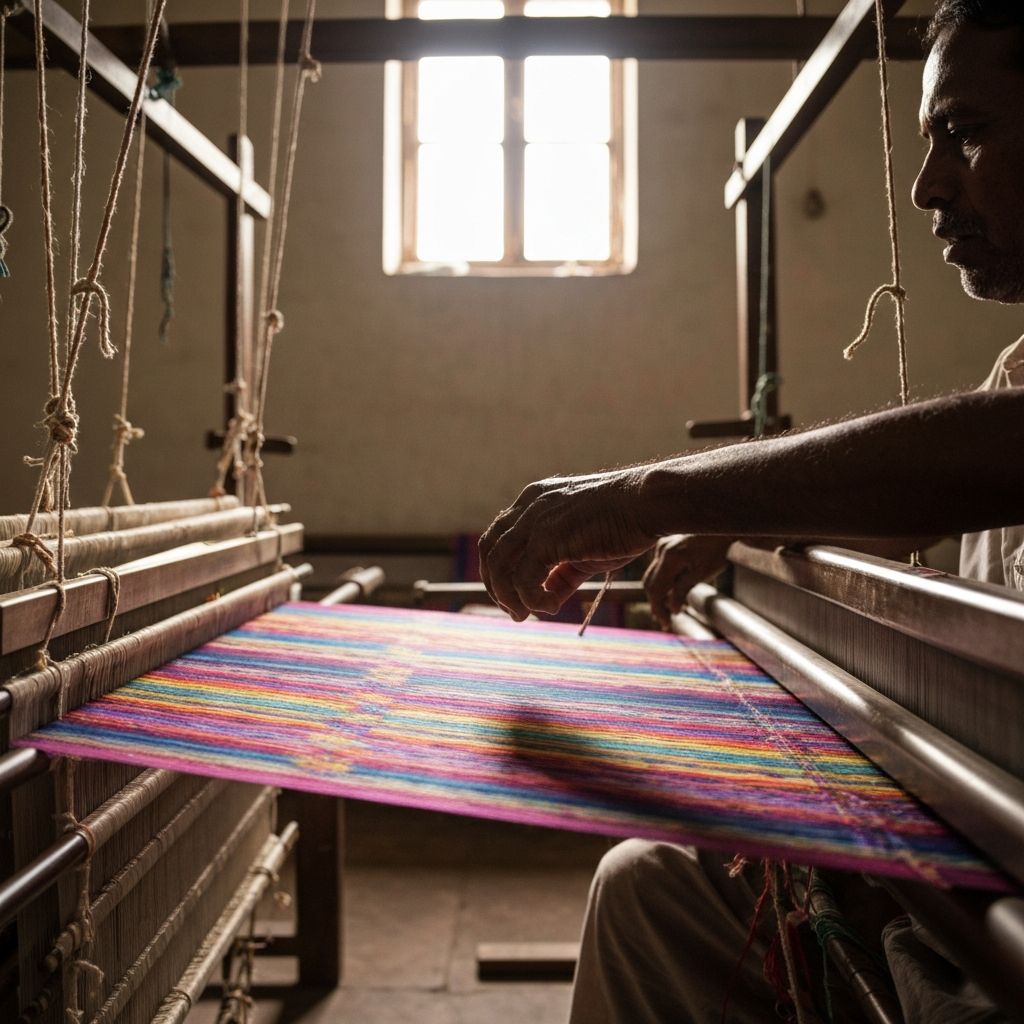
Master weavers at work on traditional handlooms, keeping ancient techniques alive
Weaving Traditions
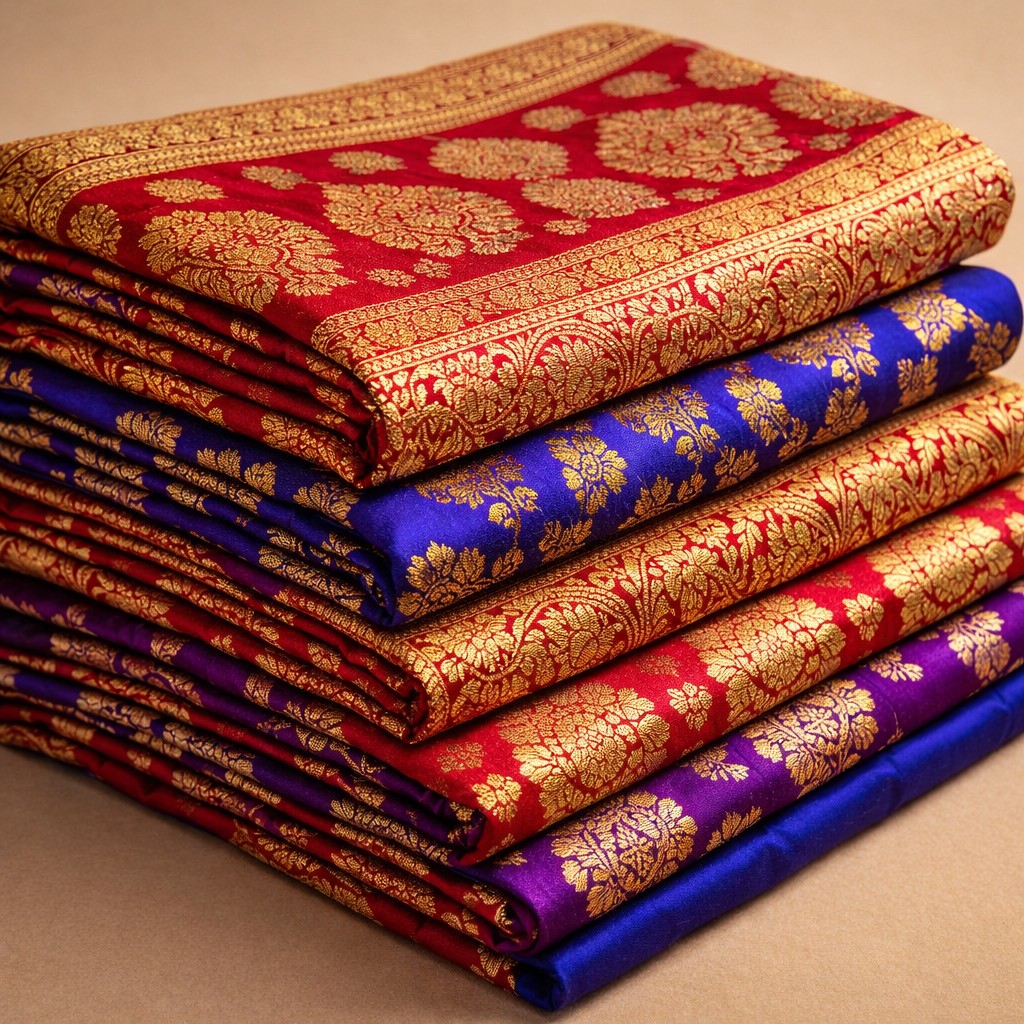
Banarasi Silk
Renowned for gold and silver brocade, intricate zari work, and fine silk. These luxurious sarees take weeks to weave and are treasured bridal wear.
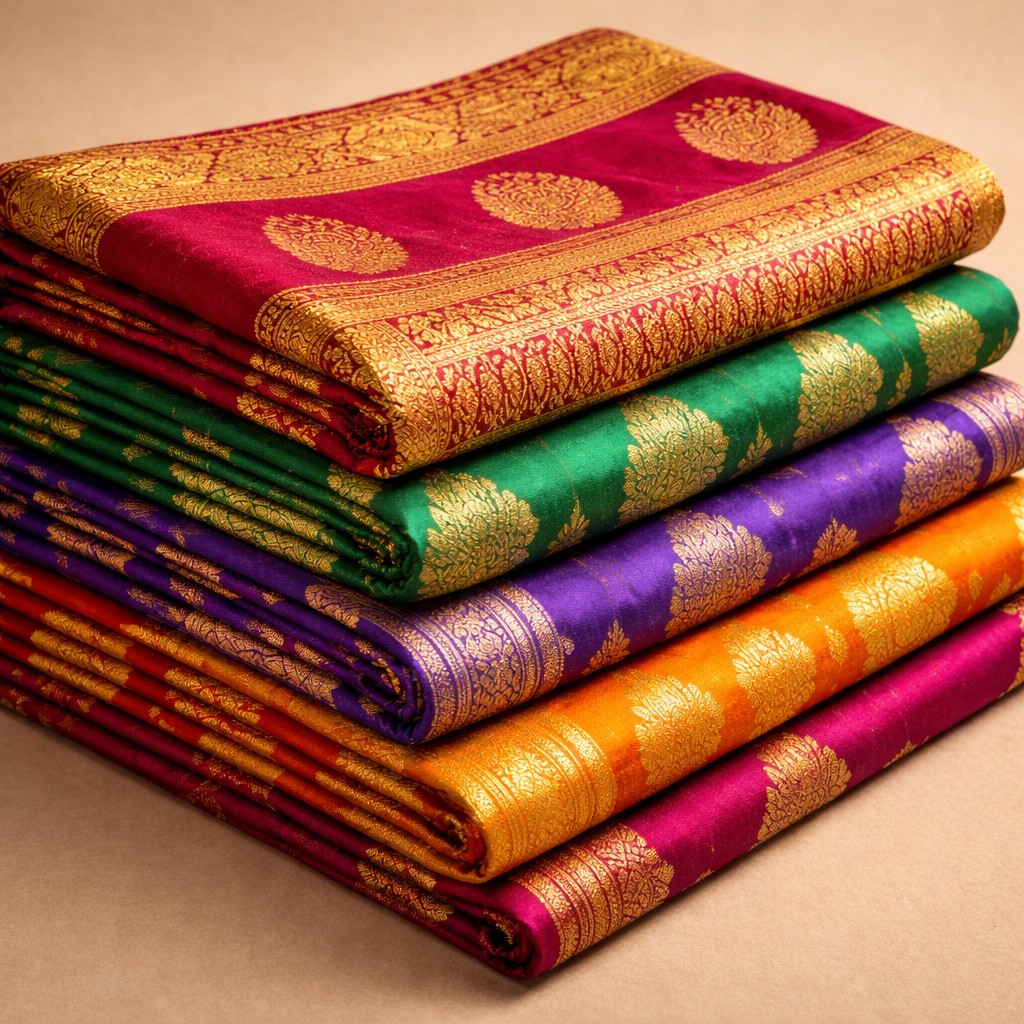
Kanjeevaram Silk
Known for their durability and distinctive temple borders. The silk and zari are woven separately and interlocked, creating a distinctive heavy drape.
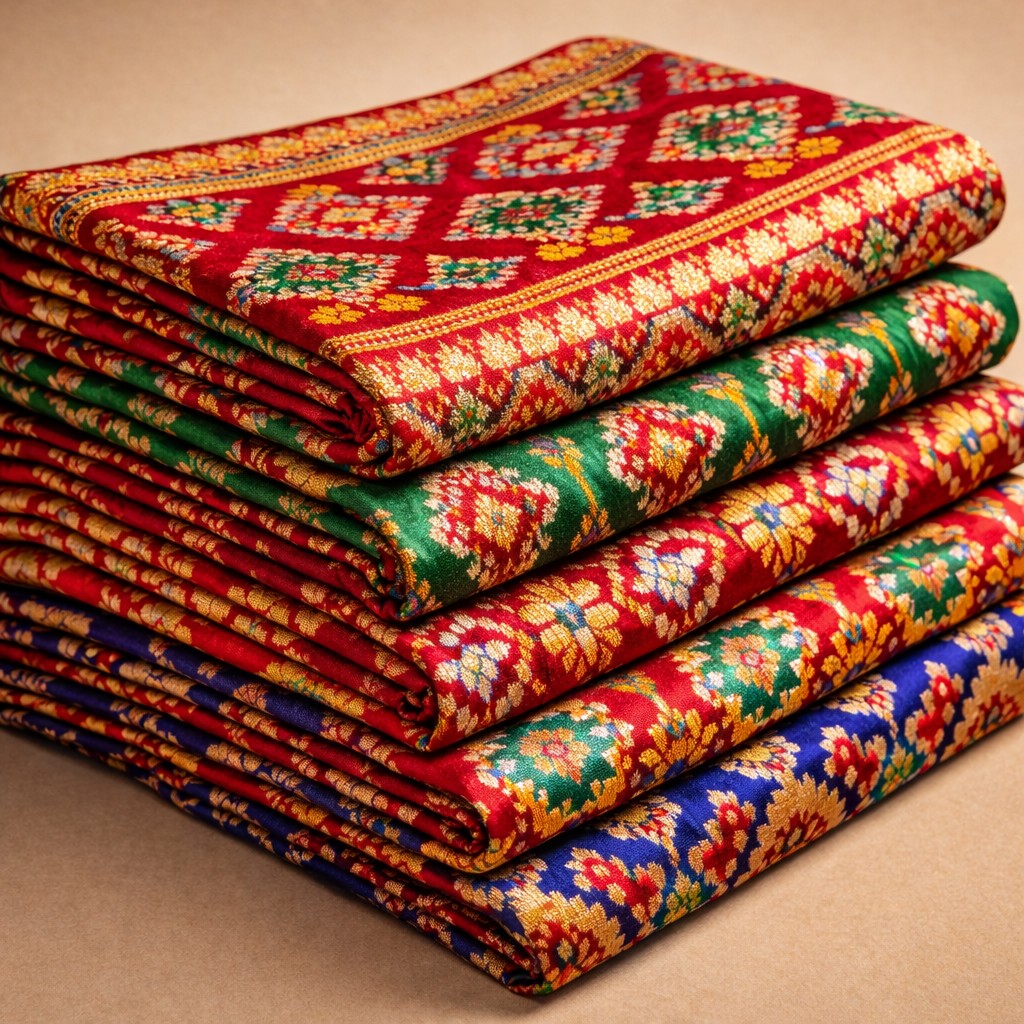
Patola
Double ikat weaving where both warp and weft threads are tie-dyed before weaving. Creating a single saree can take 6 months to a year.
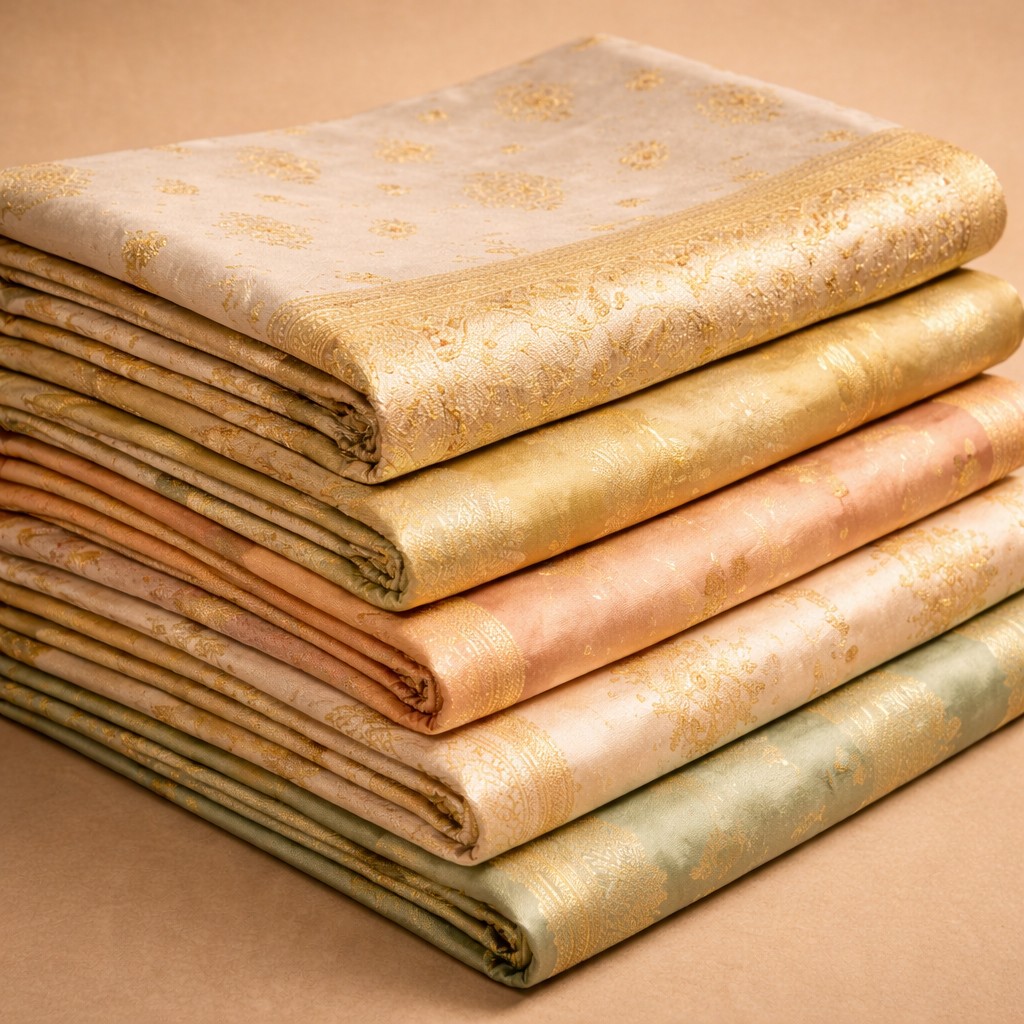
Chanderi
Lightweight fabric with a sheer texture, often featuring traditional coin, peacock, and geometric patterns woven with zari.
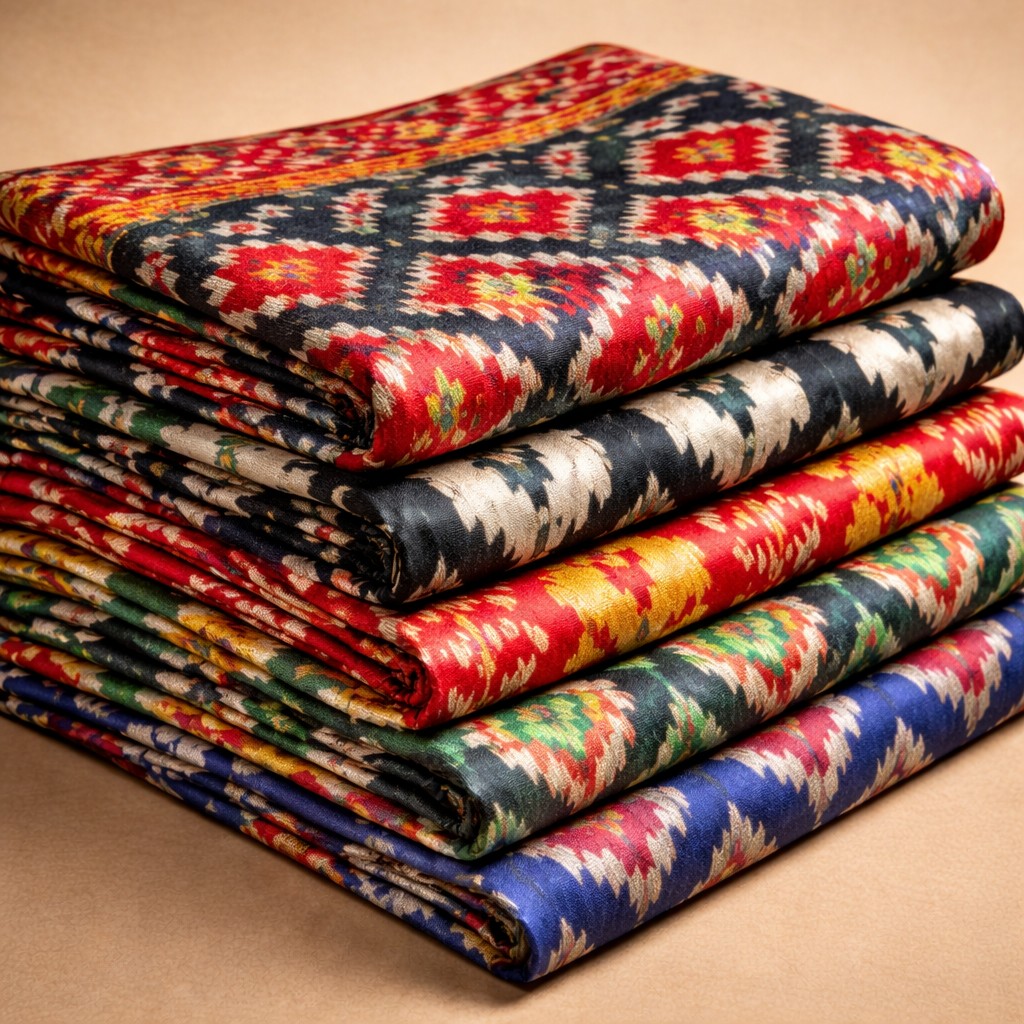
Pochampally Ikat
Geometric patterns created through resist-dyeing technique. The distinctive blurred edges give ikat its characteristic appearance.
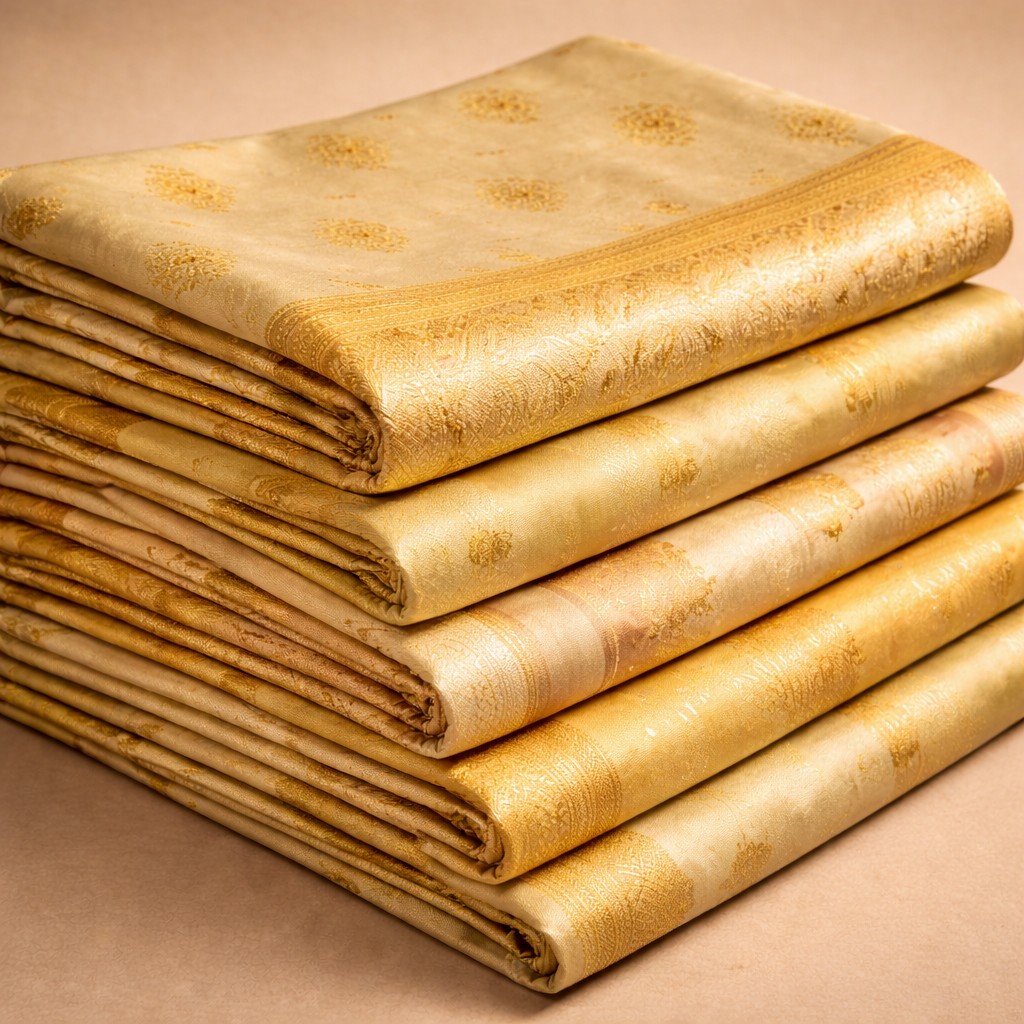
Muga Silk
A golden silk exclusive to Assam, known for its natural sheen that increases with washing. It's one of the rarest silks in the world.
Embroidery Traditions
Chikankari
LucknowDelicate white-on-white embroidery with 36 different stitches
Phulkari
PunjabColorful floral embroidery on shawls using darn stitch
Kantha
West BengalRunning stitch embroidery creating rippled texture
Zardozi
VariousHeavy gold and silver thread embroidery with beads
Kashmiri
KashmirChain stitch embroidery covering entire fabric
Kutchi
GujaratMirror work combined with geometric embroidery
Printing & Dyeing Techniques
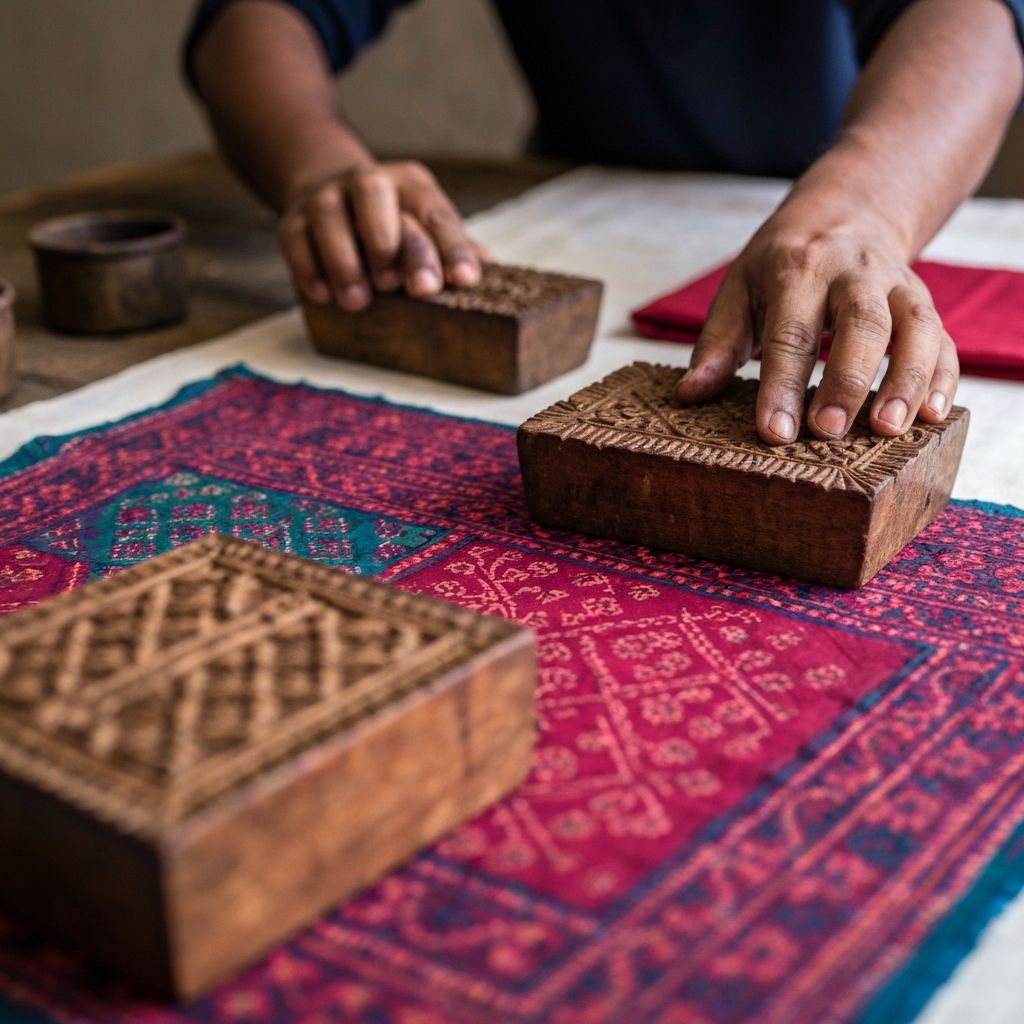
Block Printing
Hand-carved wooden blocks are dipped in natural dyes and pressed onto fabric. Jaipur, Bagru, and Sanganer are famous centers, each with distinctive styles and motifs.
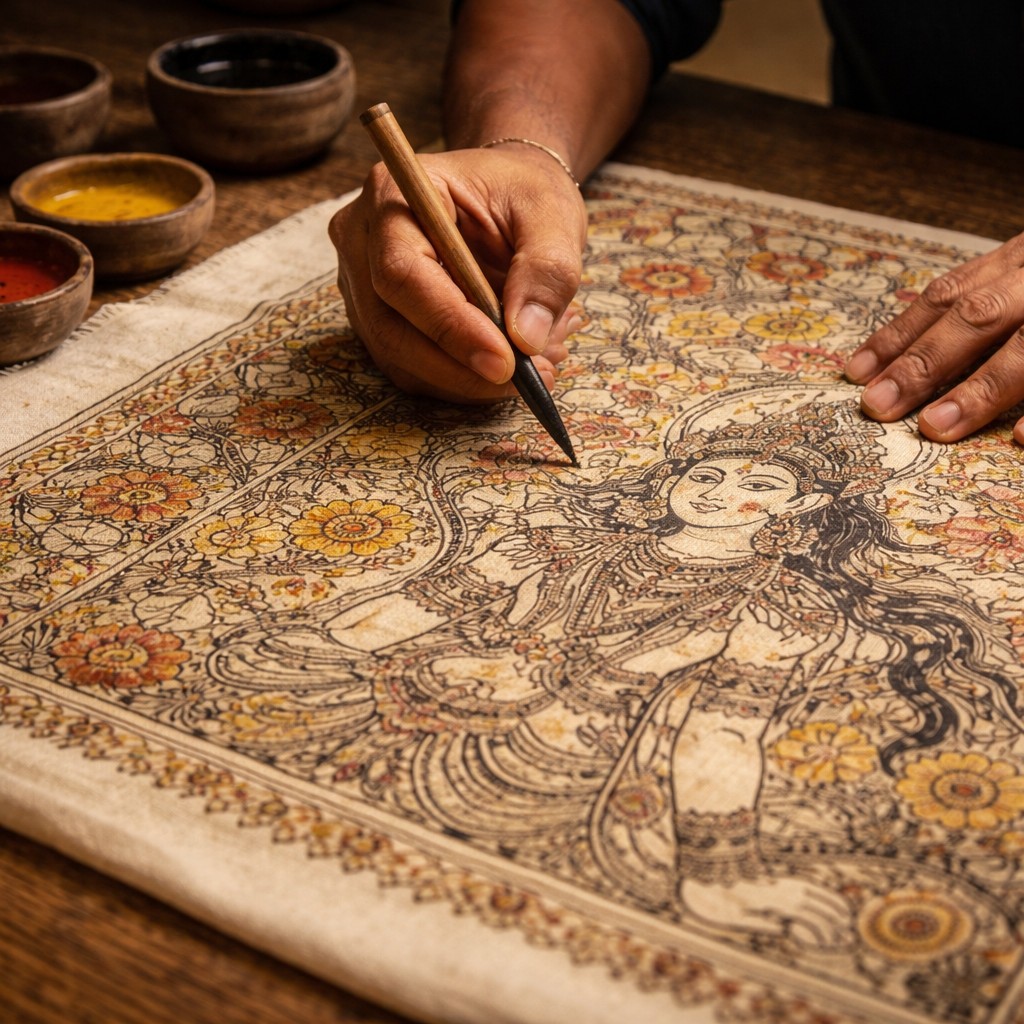
Kalamkari
Hand-painted or block-printed cotton with vegetable dyes. Srikalahasti style uses a pen (kalam) while Machilipatnam uses blocks. Mythological narratives are common themes.
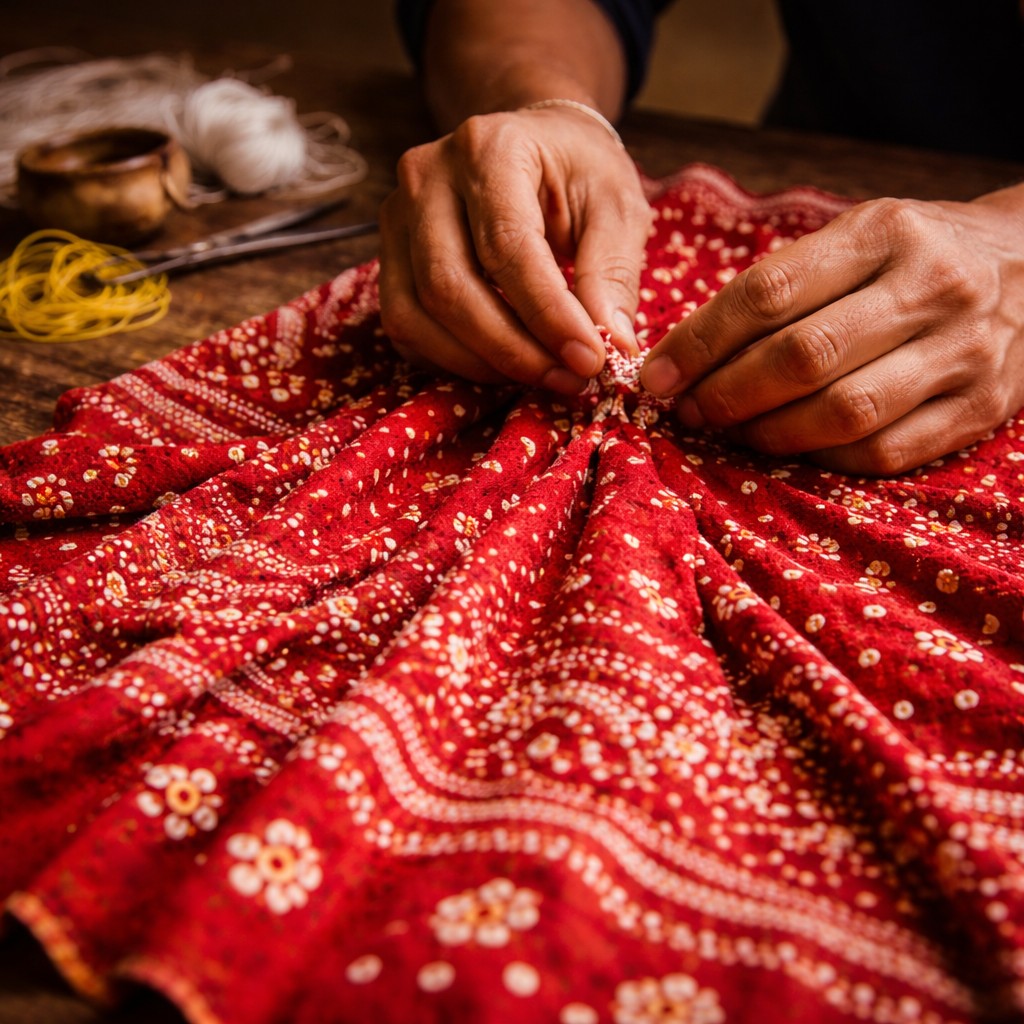
Bandhani (Tie-Dye)
Tiny portions of fabric are tied with thread before dyeing, creating intricate dotted patterns. Skilled artisans can tie thousands of dots in complex geometric designs.
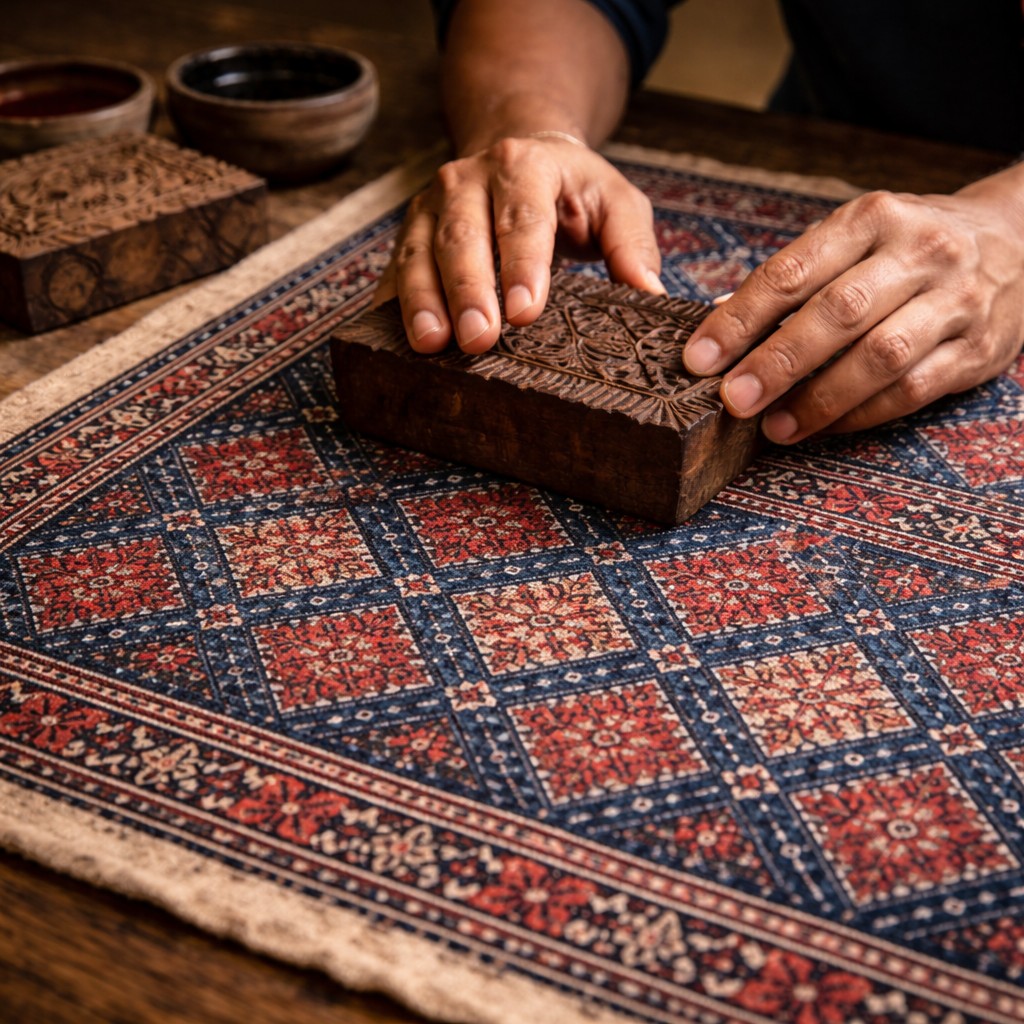
Ajrakh
Ancient resist printing using natural indigo and madder. The intricate geometric patterns require multiple printing stages over several weeks.
Traditional Natural Dyes
Indigo
Indigofera plant
Madder Red
Rubia root
Turmeric Yellow
Haldi rhizome
Catechu Brown
Katha extract
Pomegranate Green
Anar rind
Saffron Orange
Kesar threads
Lac Purple
Lac insect resin
Iron Black
Rust solution
Supporting India's Textile Heritage
- Look for Geographical Indication (GI) tags that authenticate regional textiles
- Buy directly from cooperatives and artisan collectives when possible
- Organizations like Dastkar, Craftmark, and state handloom corporations promote authentic crafts
- National Handloom Day (August 7) celebrates India's weaving heritage