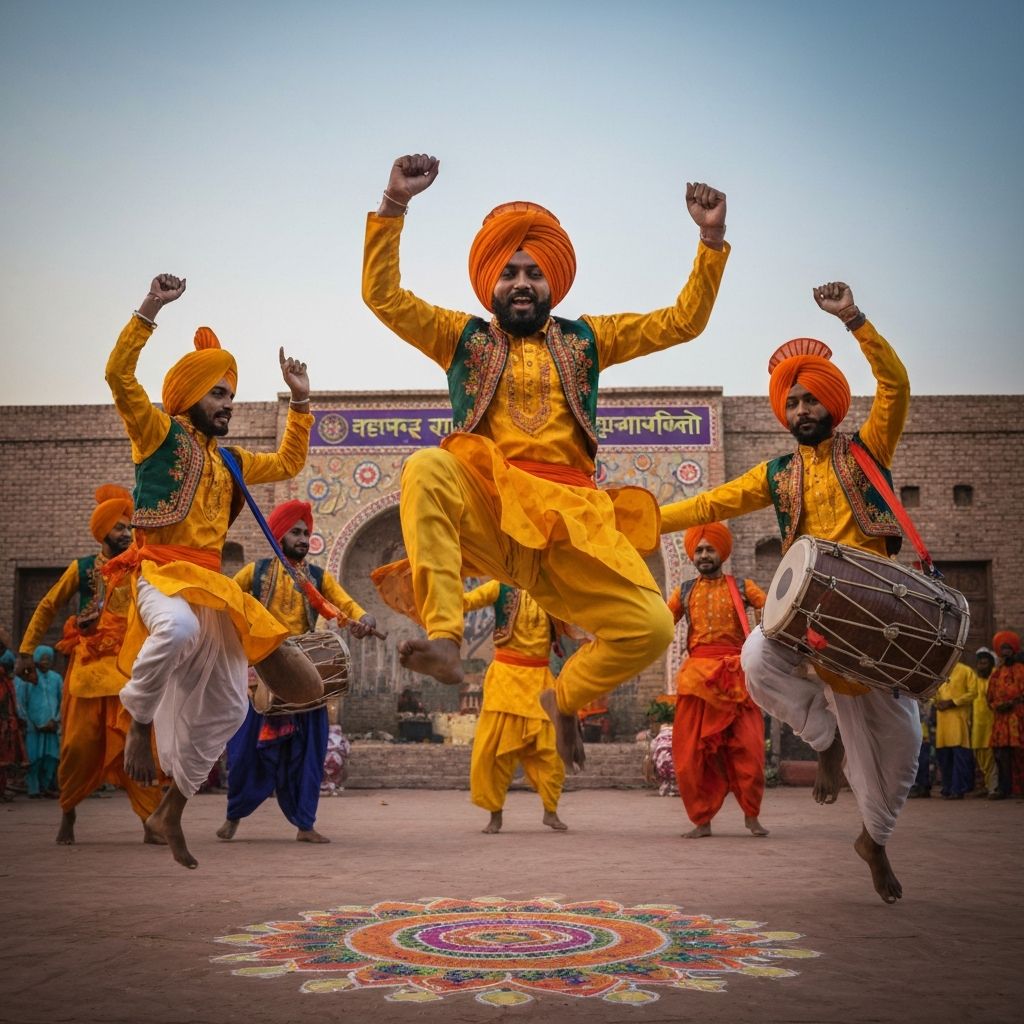
Bhangra
The thunderous heartbeat of Punjab, where every step celebrates harvest, life, and unbridled joy.
Origin
Punjab
Festival
Vaisakhi (Harvest)
Instruments
Dhol, Tumbi, Chimta
Style
High Energy
Bhangra is the electrifying folk dance of Punjab that originated as a celebration of the spring harvest festival, Vaisakhi. What began in the fields of Punjab as farmers celebrated a successful wheat harvest has evolved into one of the most recognized and beloved dance forms worldwide.
The dance is characterized by its explosive energy, vigorous kicks, leaps, and bends of the body. Dancers wear bright, colorful kurtas and lungis, often with a turban, while performing to the powerful beats of the dhol drum. The music typically features boliyan - short, witty couplets that celebrate rural life, love, and harvest.
Modern Bhangra has transcended its folk origins to become a global phenomenon, influencing popular music genres and featuring prominently at celebrations, weddings, and cultural events across the world. The infectious energy and joy of Bhangra make it impossible to resist moving to its beat.
Key Components
Dhol
Double-headed drum providing the signature beat
Boliyan
Short couplets sung during the dance
Jhummar
Slower, more graceful movements
Luddi
Victory dance performed in a snake-like fashion
Giddha
Women's folk dance counterpart
Dhamaal
Free-form energetic dance segment
Signature Movements
Traditional Attire
Men's Costume
- Kurta - Bright, loose-fitting shirt
- Lungi/Tehmat - Wrapped lower garment
- Pag/Turban - Colorful head covering
- Jutti - Traditional leather shoes
- Rumaal - Colorful scarf
Women's Costume (Giddha)
- Salwar Kameez - Traditional suit
- Dupatta - Flowing scarf
- Paranda - Hair ornament
- Tikka - Forehead jewelry
- Churiyan - Colorful bangles