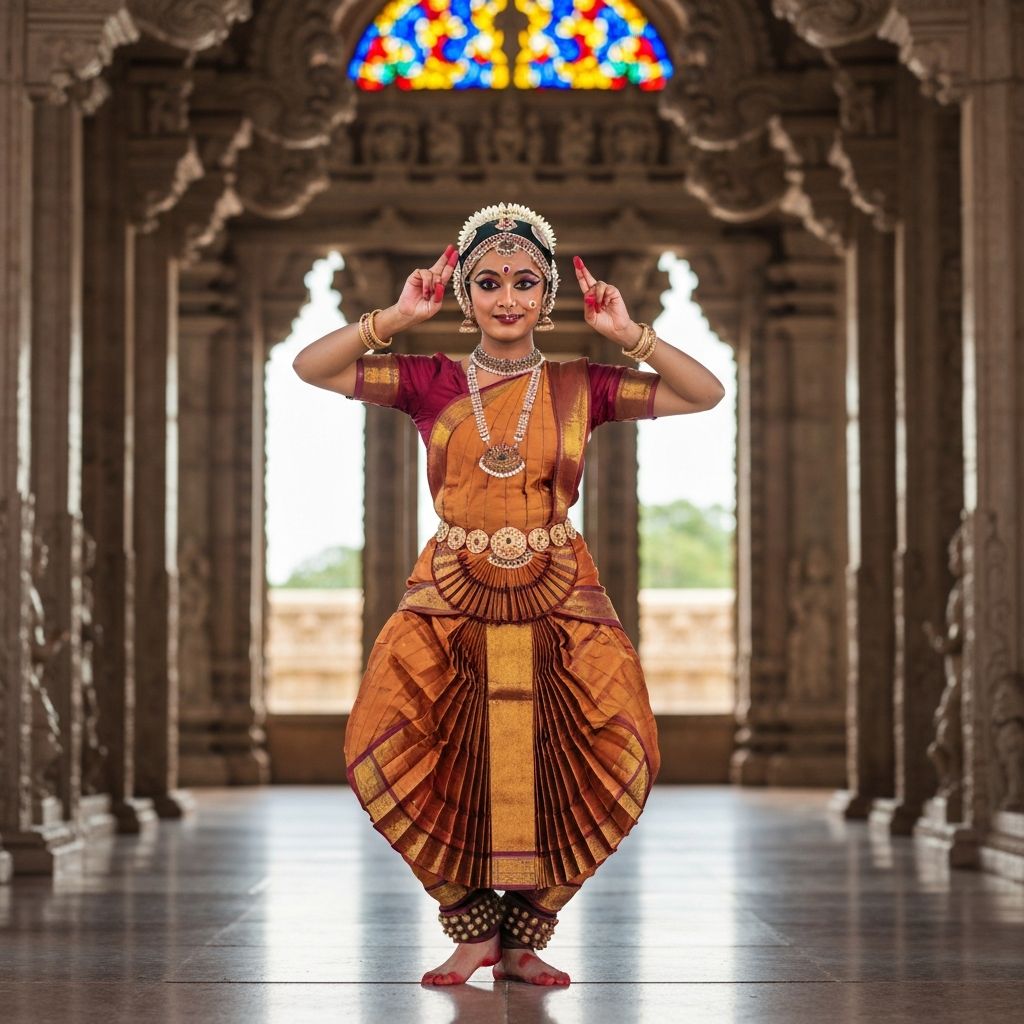
Bharatanatyam
The fire of temple dance, where every movement sculpts devotion in space and time.
Origin
Tamil Nadu
History
2000+ Years
Music
Carnatic Classical
Foundation
Natya Shastra
Bharatanatyam is one of the oldest and most popular classical dance forms of India, originating in the temples of Tamil Nadu over 2000 years ago. Originally called Sadir or Dasiattam, it was performed by Devadasis as a form of worship and divine offering.
The dance is characterized by its bent-knee position (aramandi), intricate footwork, and sculpturesque poses that mirror the postures seen in temple carvings. Every aspect - from the elaborate costume to the precise mudras (hand gestures) - is codified and carries symbolic meaning.
Pioneers like Rukmini Devi Arundale revived and standardized Bharatanatyam in the 20th century, establishing institutions like Kalakshetra that continue to preserve and promote this ancient art form.
Margam (Repertoire)
Alarippu
Opening invocatory piece, pure dance offering
Jatiswaram
Abstract dance showcasing rhythmic patterns
Shabdam
First expressive piece with simple lyrics
Varnam
Centerpiece combining nritta and abhinaya
Padam
Expressive piece depicting devotion or love
Tillana
Rhythmic finale with brisk movements
The Three Aspects
- Nritta: Pure abstract dance focusing on rhythm and movement
- Nritya: Expressive dance conveying meaning through gesture and expression
- Natya: Dramatic element with narrative and character portrayal