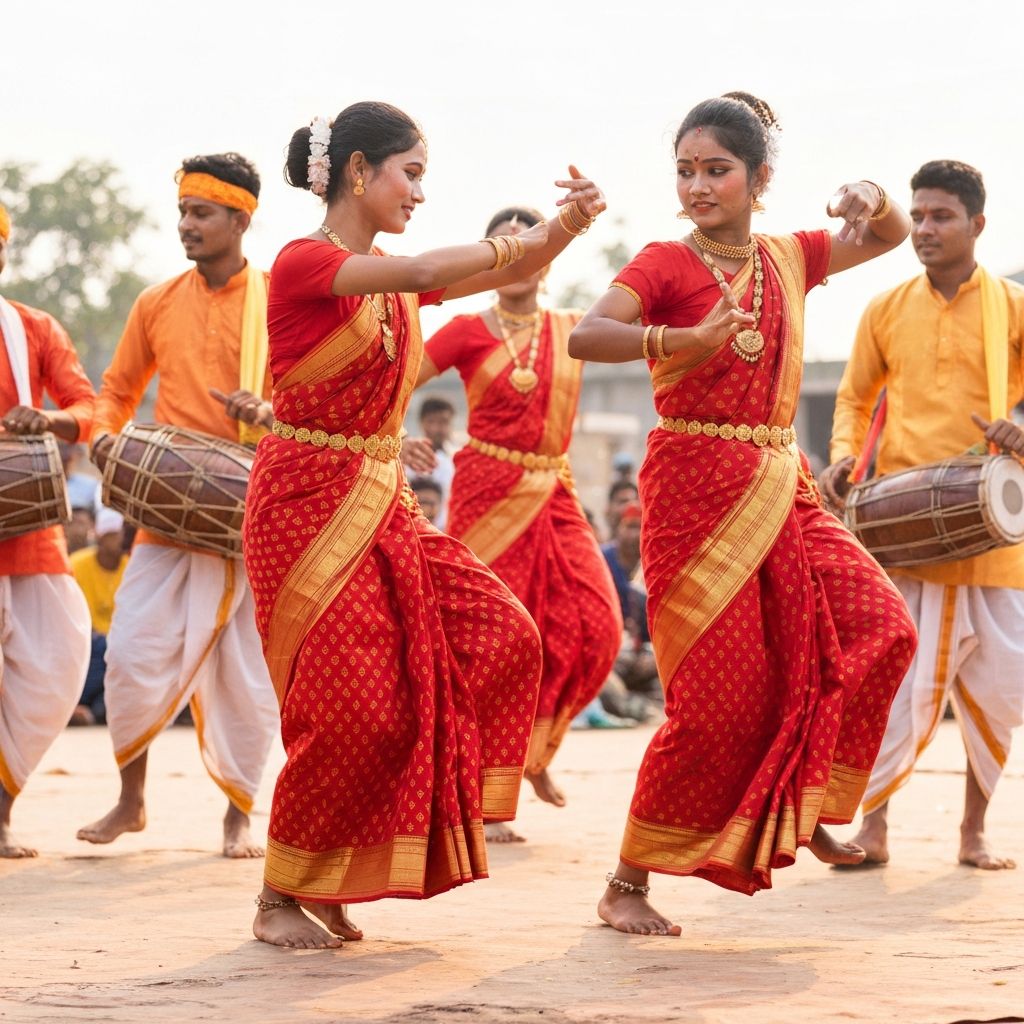
Bihu
The joyous rhythm of Assam, celebrating life, love, and the eternal cycle of seasons.
Origin
Assam
Festival
Bohag Bihu (April)
Instruments
Dhol, Pepa, Gogona
Style
Joyful & Energetic
Bihu is the most celebrated folk dance of Assam, performed during the Bihu festival which marks the Assamese New Year. The dance is an expression of unbridled joy, celebrating the arrival of spring, the harvest season, and the beauty of life in the Brahmaputra valley.
The dance is characterized by quick footwork, rapid hand movements, and swaying of the hips. Young men and women dance together in circles, their movements synchronized to the infectious beats of the dhol and the haunting melody of the pepa (buffalo horn pipe). The songs often speak of love, nature, and the everyday life of Assamese people.
Bihu dancing is typically performed in open fields where young people gather to celebrate. It represents the vivacity of youth and the agricultural heritage of Assam, making it not just a dance but a celebration of Assamese identity and culture.
Traditional Instruments
Dhol
Large barrel drum providing the base rhythm
Pepa
Buffalo horn instrument with distinctive sound
Gogona
Bamboo jaw harp adding melodic textures
Taal
Small cymbals maintaining tempo
Toka
Bamboo clapper for rhythmic accent
Baanhi
Bamboo flute for melodic accompaniment
Three Bihus of Assam
Rongali Bihu (Bohag)
Celebrated in April, marking Assamese New Year and spring harvest
Kongali Bihu (Kati)
Observed in October when granaries are depleted
Bhogali Bihu (Magh)
Celebrated in January, marking the end of harvesting season
Traditional Costume
Women's Attire
- Mekhela Chador: Traditional two-piece silk garment
- Gamusa: Red and white traditional scarf
- Kopou Phool: Orchid flowers in hair
- Gold Jewelry: Traditional Assamese ornaments
Men's Attire
- Dhoti: Traditional lower garment
- Gamusa: Worn around head or shoulders
- Cheleng Chador: Upper garment for special occasions