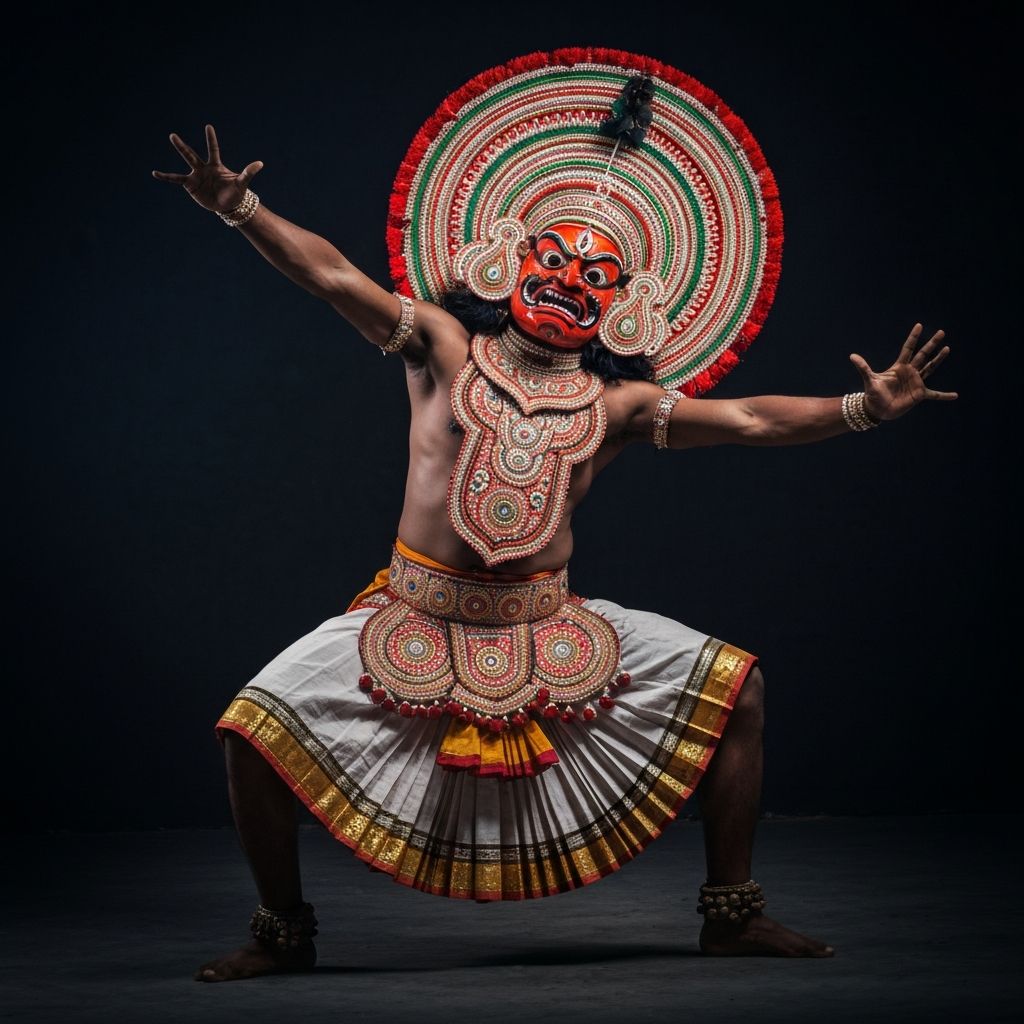
Chhau
The warrior's art of Eastern India, where masks and movement bring epic battles to life.
Origin
Odisha, Jharkhand, West Bengal
Festival
Chaitra Parva (Spring)
Music
Dhol, Dhamsa, Mohuri
UNESCO
Intangible Heritage (2010)
Chhau is a powerful semi-classical dance form with martial, tribal, and folk traditions, originating from the eastern states of India. The name 'Chhau' is derived from the Sanskrit word 'Chhaya' (shadow or image), reflecting the dance's dramatic portrayal of characters through elaborate masks and movements.
This ancient art form combines elements of martial arts, acrobatics, and storytelling. Performers enact stories from the great Indian epics, bringing gods, demons, and legendary warriors to life through vigorous movements, high jumps, and dramatic combat sequences. The dance is traditionally performed at night during the spring festival of Chaitra Parva.
In 2010, UNESCO inscribed Chhau on the Representative List of the Intangible Cultural Heritage of Humanity, recognizing its unique artistic value and the need for its preservation.
Regional Styles
Purulia Chhau
West BengalKnown for elaborate masks representing gods, demons, and animals. Highly acrobatic.
Seraikella Chhau
JharkhandUses delicate, stylized masks. More lyrical and subtle in expression.
Mayurbhanj Chhau
OdishaPerformed without masks. Focuses on facial expressions and body movements.
Key Components
Masks
Elaborate papier-mache masks (in Purulia and Seraikella styles)
Martial Movements
War-like stances and combat sequences
Acrobatics
High jumps, somersaults, and athletic feats
Dhol-Mohuri
Traditional drums and shehnai music
Night Performances
Traditionally performed under open skies
Mythological Themes
Stories from Ramayana, Mahabharata, Puranas
The Art of Mask Making
The masks used in Purulia and Seraikella Chhau are masterpieces of folk art, crafted by skilled artisans using traditional techniques passed down through generations.
- Materials: Papier-mache, cloth, clay, and natural colors
- Characters: Gods, demons, animals, and mythological beings
- Colors: Each color symbolizes different emotions and character types
- Process: Can take weeks to create a single elaborate mask