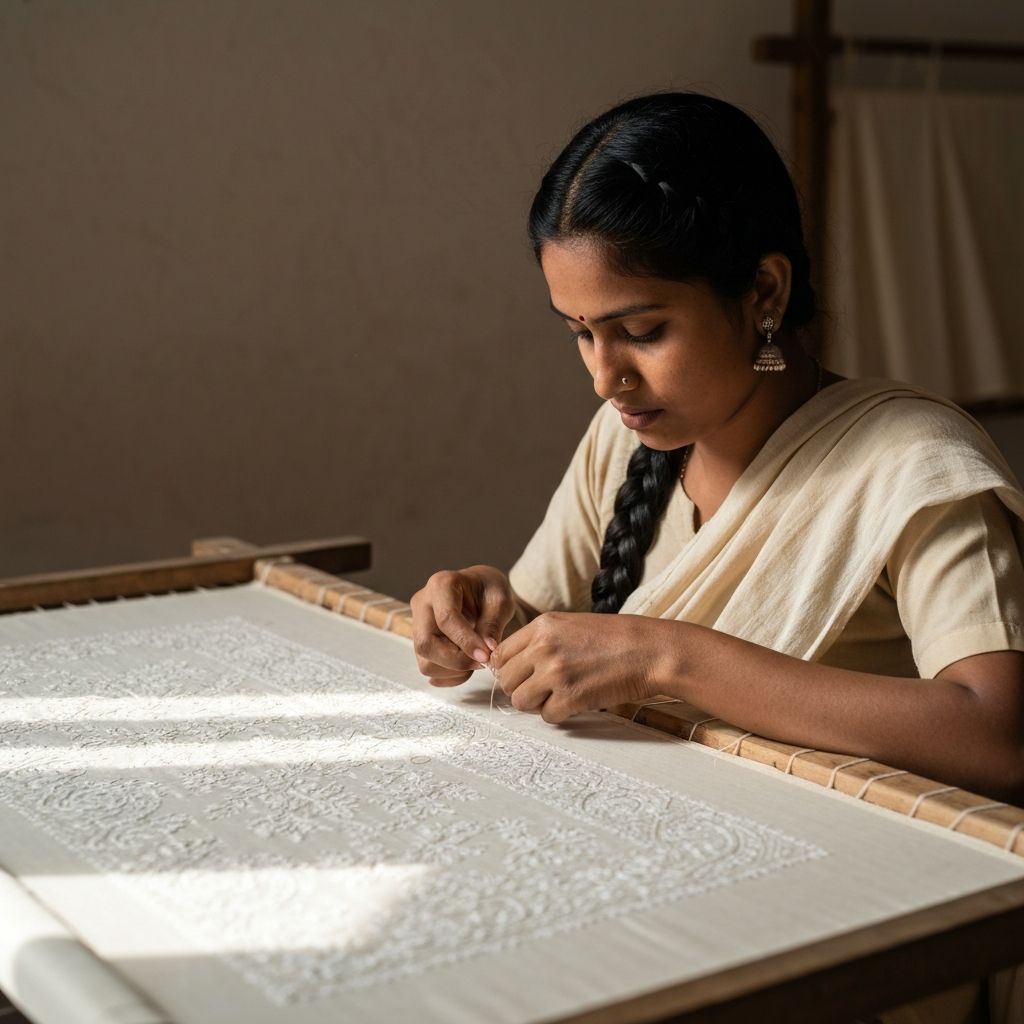
Chikankari
The ethereal white embroidery of Lucknow, where threads weave poetry on fabric.
Origin
Lucknow, Uttar Pradesh
History
Mughal Era (17th Century)
Stitches
36+ Traditional Types
Recognition
GI Tagged (2008)
Chikankari is a traditional embroidery style from Lucknow, known for its delicate and intricate patterns. The name derives from the Persian word "Chikin" or "Chikeen" meaning a type of cloth worked with needles in different styles.
Legend attributes its introduction to Nur Jahan, the Mughal empress, who brought this Persian craft to India. Under the patronage of Nawabs of Awadh, Chikankari flourished in Lucknow, becoming synonymous with the city's refined culture and tehzeeb (etiquette).
Traditionally done with white thread on white muslin, modern Chikankari now includes colored threads on various fabrics. However, the most prized pieces remain the classic white-on-white, where the beauty lies in the play of shadow and light through the delicate needlework.
Traditional Stitches
Taipchi
Running stitch forming the base of designs
Bakhia
Shadow work creating subtle patterns visible from reverse
Phanda
Knot stitch creating tiny raised dots
Murri
Fine satin stitch for filling petals and leaves
Jali
Net-like openwork creating transparent patterns
Keel Kangan
Intricate border stitch
Traditional Motifs
The Artisan Community
Chikankari supports over 250,000 artisans in and around Lucknow, predominantly women who work from their homes. The craft is passed down through generations, with different families specializing in specific stitches.
- A single garment may pass through 20-25 hands
- Fine pieces can take months to complete
- GI tag protects authenticity of Lucknowi Chikankari