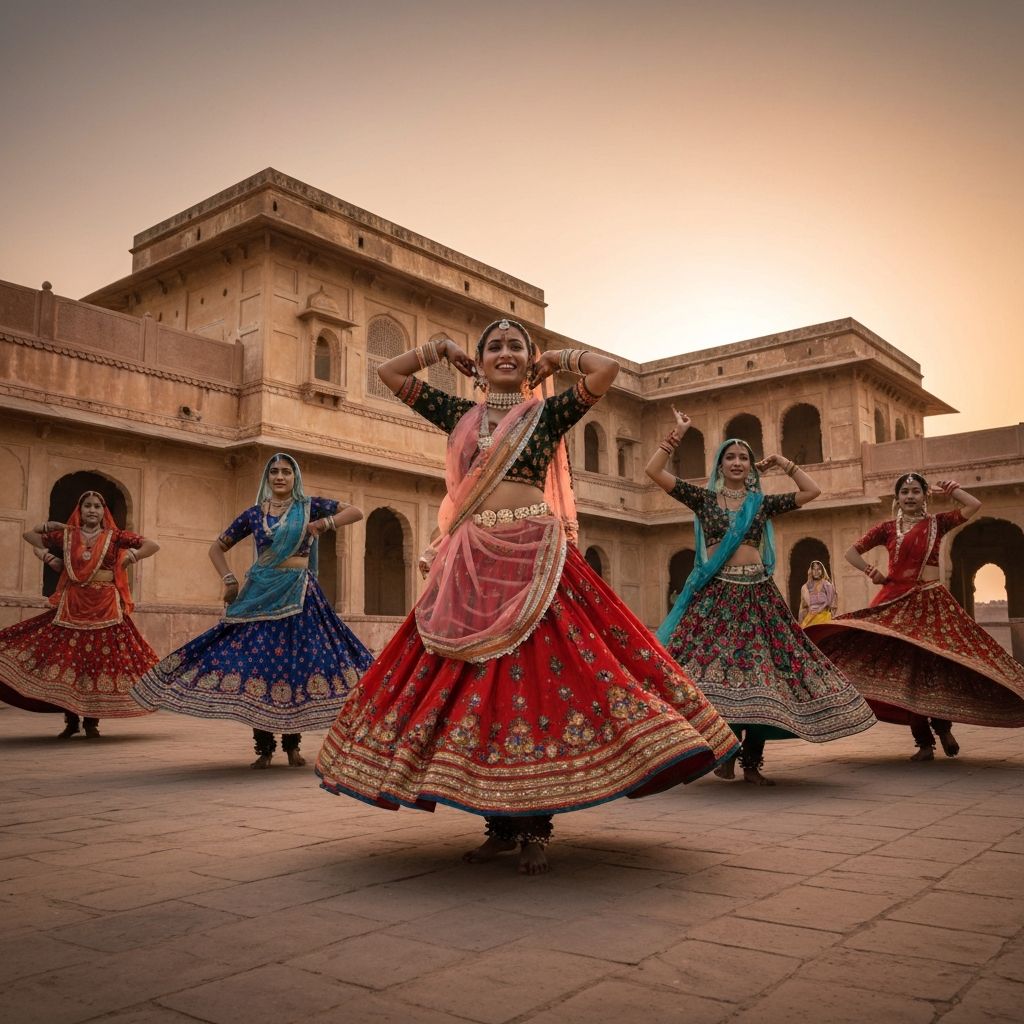
Ghoomar
The whirling poetry of Rajasthan, where flowing ghagras paint circles of color and grace.
Origin
Rajasthan
Occasions
Weddings, Festivals
Music
Rajasthani Folk
Style
Graceful Spinning
Ghoomar is the quintessential folk dance of Rajasthan, traditionally performed by women during auspicious occasions like weddings, festivals, and religious celebrations. The name derives from 'ghoomna' (to spin) and captures the essence of this mesmerizing dance.
Originally performed by the Bhil tribe, Ghoomar was later adopted by Rajput women and became an integral part of royal celebrations. The dance is characterized by graceful pirouettes where women in flowing ghagras (long skirts) spin in circles, creating spectacular visual patterns as their colorful attire fans out.
A distinctive feature of Ghoomar is the veiled face - dancers often cover their faces with their odhnis (veils) during certain movements, adding an element of modesty and mystique. The synchronized clapping, rhythmic footwork, and gentle swaying create a hypnotic visual poetry that celebrates Rajasthani femininity and tradition.
Key Components
Ghagra
Flowing circular skirt that creates mesmerizing patterns
Pirouettes
Graceful spins that are the hallmark of Ghoomar
Hand Movements
Delicate gestures covering the face during spins
Circular Formation
Dancers move in circles, weaving patterns
Clapping Rhythms
Synchronized clapping accompanies the dance
Singing
Traditional folk songs sung while dancing
Traditional Costume
- Ghagra: A flowing, embroidered circular skirt in vibrant colors
- Kanchli/Choli: A fitted blouse with traditional embroidery
- Odhni: A long veil draped over the head and shoulders
- Jewelry: Borla (maang tikka), necklaces, bangles, and payals (anklets)
Cultural Significance
Ghoomar holds deep cultural significance in Rajasthani society. It is often the first dance a new bride performs in her husband's home, symbolizing her welcoming into the family. The dance is also performed during Gangaur and Teej festivals, celebrating marital happiness and the arrival of monsoon.
The dance gained international recognition through Bollywood, particularly the song 'Ghoomar' from the film Padmaavat, which showcased the elegance and beauty of this traditional art form to global audiences while sparking discussions about cultural preservation.