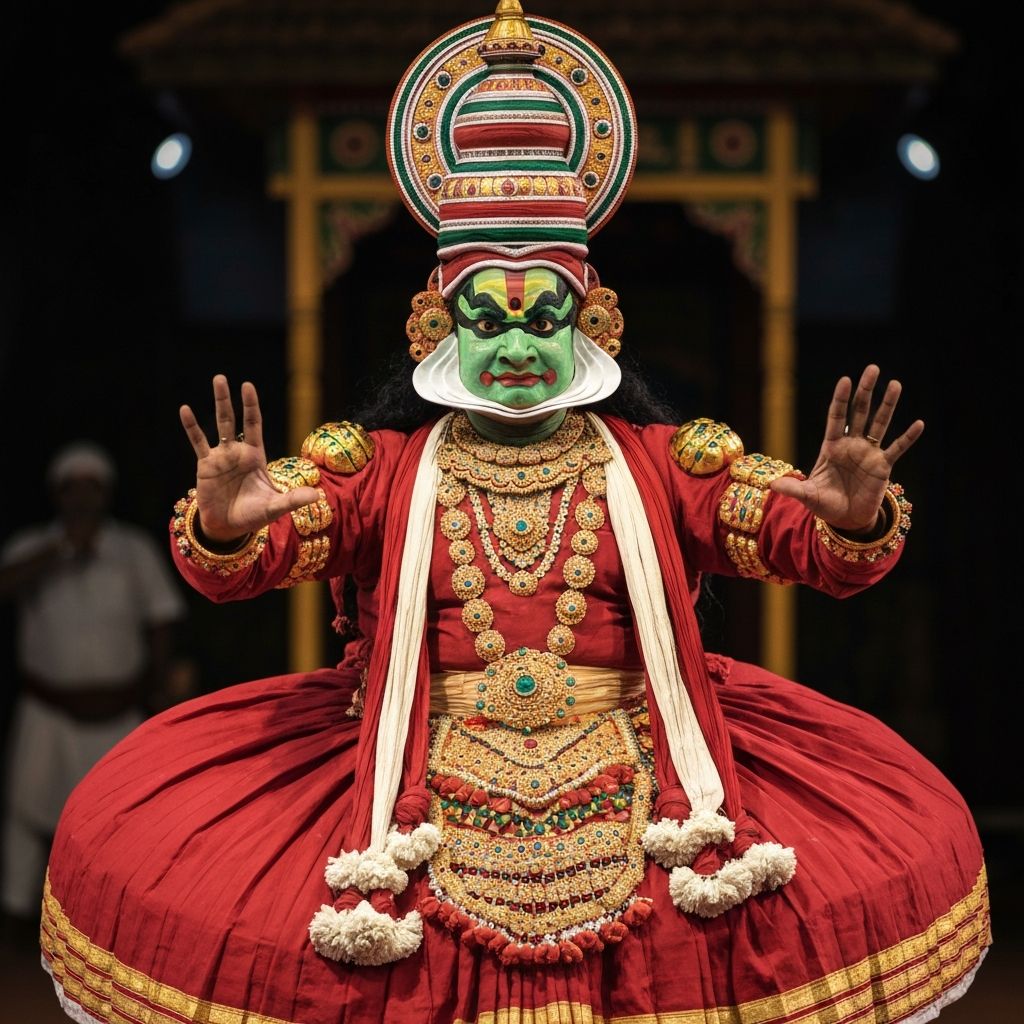
Kathakali
Where gods and demons come alive through painted faces and thundering drums.
Origin
Kerala
History
17th Century CE
Music
Sopanam Style
Makeup
3-4 Hours
Kathakali is a classical Indian dance-drama that originated in Kerala during the 17th century. The word "Kathakali" literally means "story-play" and combines literature (Sahithyam), music (Sangeetham), acting (Natyam), costume/makeup (Aaharyam), and dance (Nrithyam) into a spectacular theatrical experience.
This art form evolved from earlier traditions like Krishnanattam and Ramanattam under the patronage of the Zamorins of Calicut and the rulers of Kottarakkara. What makes Kathakali unique is its highly stylized nature - performers undergo years of rigorous training to master the intricate mudras (hand gestures), facial expressions (navarasas), and complex footwork.
The elaborate costumes and makeup are symbolic - each color and element identifies the character's nature. Heroes wear green makeup (paccha), while villains sport red patterns. The towering headgear (kiritam), massive skirts (uttariyam), and face frames (chutti) transform human performers into larger-than-life mythological beings.
Vesham (Makeup Types)
Pacha (Green)
Noble heroes like Rama, Krishna, and Arjuna with green face makeup
Kathi (Knife)
Villains with streaks of red on green face, like Ravana
Thadi (Beard)
Red, white, or black beards denoting different character types
Kari (Black)
Demonesses and forest dwellers with black faces
Minukku (Polished)
Women and sages with lustrous yellow-pink makeup
Teppu (Special)
Special characters like Garuda and Hanuman
What Makes Kathakali Unique
Elaborate Makeup
The chutti (face makeup) takes 3-4 hours to apply, using natural colors. The green (paccha) symbolizes nobility, while red denotes evil or passion.
No Dialogue
Performers do not speak. The story is conveyed entirely through mudras (hand gestures), facial expressions, and body movements while background singers narrate.
Epic Stories
Stories are drawn primarily from the Ramayana, Mahabharata, and Puranas, depicting battles between good and evil.
Night-Long Performances
Traditional performances begin at dusk and continue through the night, sometimes lasting 8-10 hours.
Famous Kathakali Stories
- Nalacharitham: The story of King Nala and Damayanti
- Duryodhana Vadham: The fall of Duryodhana from Mahabharata
- Kalyana Saugandhikam: Bhima's quest for the celestial flower
- Kirmira Vadham: Bhima's battle with the demon Kirmira
- Keechaka Vadham: Bhima slays the evil Keechaka