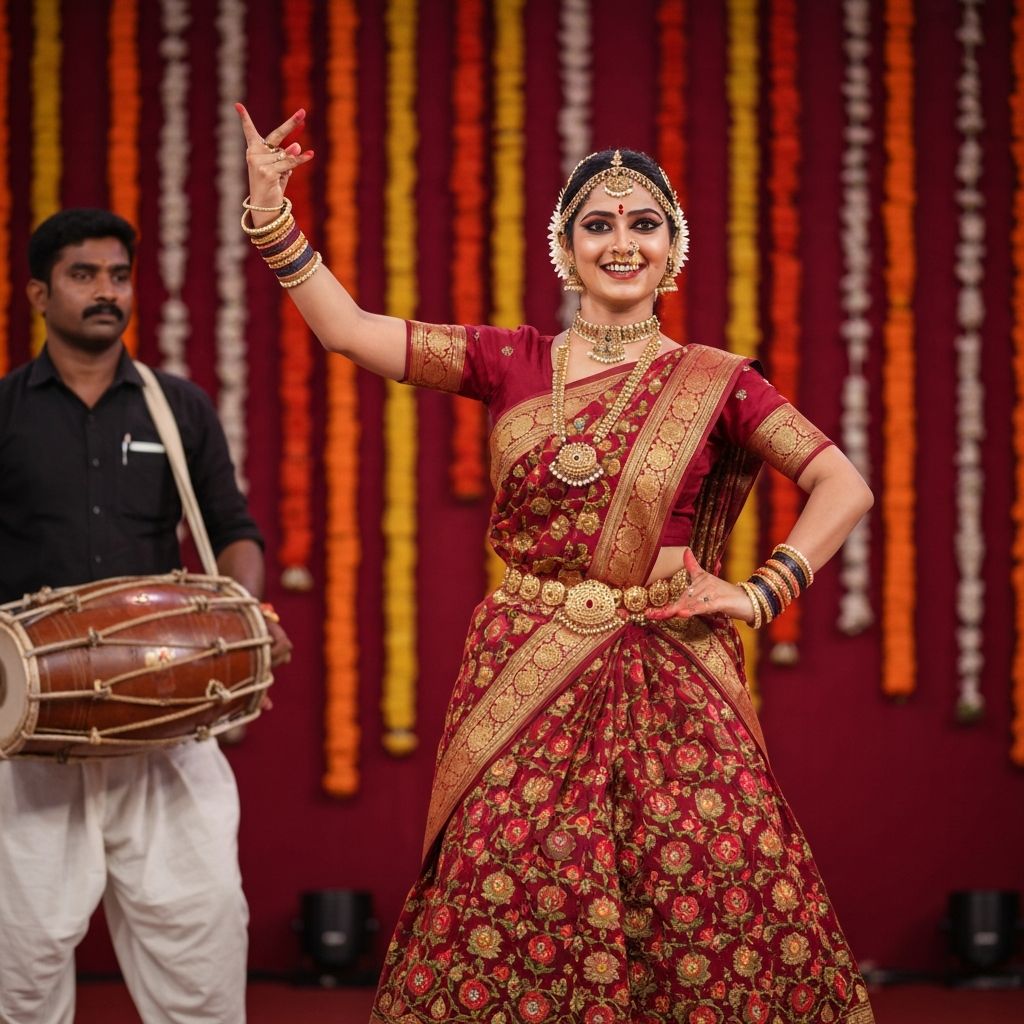
Lavani
The bold pulse of Maharashtra, where rhythm and poetry ignite powerful storytelling.
Origin
Maharashtra
Era
Peshwa Period
Instruments
Dholki, Manjeera
Style
Fast & Expressive
Lavani is the dynamic folk dance of Maharashtra that combines powerful rhythm with expressive storytelling. The word 'Lavani' comes from 'Lavanya' meaning beauty, and the art form lives up to its name through its celebration of grace, sensuality, and dramatic expression.
Historically, Lavani developed during the Peshwa period and was performed to entertain and boost the morale of weary soldiers. Over time, it evolved into a sophisticated art form performed in traditional theaters called 'tamasha.' The dance is characterized by fast-paced movements, strong footwork, and expressive singing.
Lavani performers are known for their bold, confident stage presence. The songs often contain witty, double-meaning lyrics that comment on social issues, politics, and human relationships. Despite facing social stigma in the past, Lavani is now recognized as an important cultural heritage of Maharashtra.
Key Components
Dholki
Traditional drum providing the fast-paced beat
Nauvari Saree
Nine-yard saree worn in a distinctive style
Footwork
Quick, rhythmic foot movements
Expressions
Dramatic facial expressions conveying emotions
Poetry
Lavani songs with witty, romantic lyrics
Improvisation
Spontaneous creativity in performance
Types of Lavani
Nirguni Lavani
Philosophical and spiritual themes, focused on devotion
Shringari Lavani
Romantic and sensual themes celebrating love
Traditional Costume
- Nauvari Saree: Nine-yard saree draped in the distinctive Maharashtrian style
- Heavy Jewelry: Nath (nose ring), choker, earrings, and bangles
- Gajra: Jasmine flowers adorning the hair bun
- Kumkum & Bindi: Traditional forehead decoration
- Ghungroo: Ankle bells that accentuate the footwork