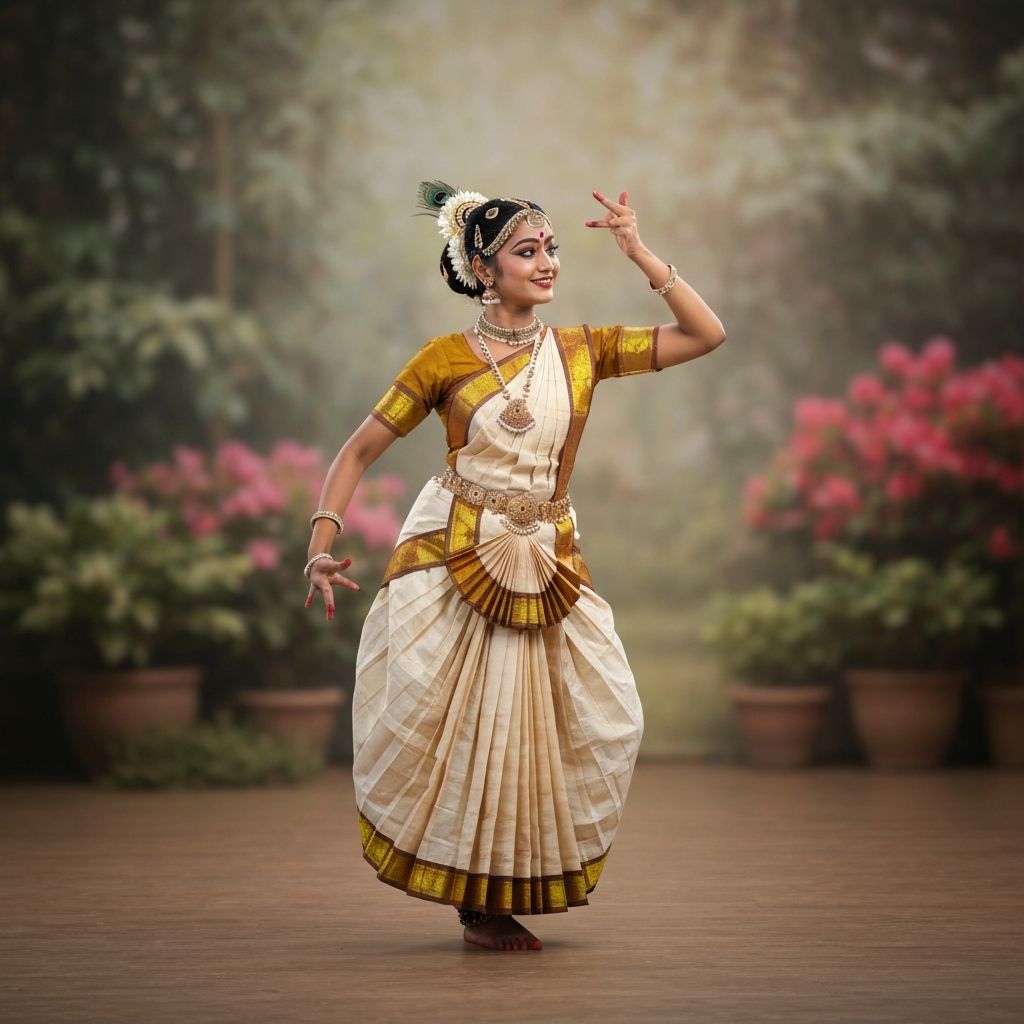
Manipuri
The gentle poetry of devotion, where movements flow like water and love takes ethereal form.
Origin
Manipur
History
15th Century CE
Music
Manipuri Sankirtana
Theme
Radha-Krishna Leela
Manipuri dance is one of the major classical dance forms of India, originating from the northeastern state of Manipur. Known for its gentle, lyrical movements and devotional themes, it stands apart from other classical forms with its soft, rounded movements that avoid any sudden jerks or sharp edges.
The dance form is deeply rooted in Vaishnavism and is primarily used to depict the Raas Leela - the divine love of Radha and Krishna. Legend has it that when Krishna performed the Raas Leela, even Lord Shiva wished to witness it, and Manipur (then called Manipuri Mandala) was chosen as the venue. The dance was revived and popularized by King Bhagyachandra in the 18th century.
Rabindranath Tagore, deeply moved by the beauty of Manipuri dance, introduced it to Shantiniketan in the 1920s, helping to bring this graceful art form to national and international attention.
Dance Forms
Raas Leela
Divine dance of Krishna with the Gopis
Sankirtana
Devotional singing and dancing
Cholom
Drum dance performed by men
Pung Cholom
Acrobatic drum dance
Kartal Cholom
Dance with cymbals
Lai Haraoba
Ancient ritualistic dance
What Makes Manipuri Unique
Cylindrical Costume
The distinctive potloi (barrel-shaped skirt embroidered with mirrors) worn by female dancers is unique to Manipuri, creating a bell-like silhouette.
Gentle Movements
Unlike vigorous classical forms, Manipuri is characterized by soft, lyrical movements with no sharp stamping - the feet caress the ground rather than strike it.
Raas Leela
The form is famous for depicting the divine love of Radha and Krishna through the Raas Leela, performed on full moon nights.
No Ankle Bells
Unique among classical forms, female Manipuri dancers do not wear ghungroos (ankle bells), emphasizing grace over rhythm.
The Five Types of Raas Leela
- Maha Raas: Performed on the full moon of Kartik (October-November)
- Vasanta Raas: Spring festival Raas celebrating Holi
- Kunja Raas: Performed in the bower (kunja) setting
- Nitya Raas: Can be performed on any day
- Diba Raas: Daytime performance