Nati
The gentle rhythm of the Himalayas, where communities unite in graceful, flowing celebration.
Origin
Himachal Pradesh
Festival
Cultural Occasions
Music
Karnal, Dhol, Nagara
Record
Guinness World Record
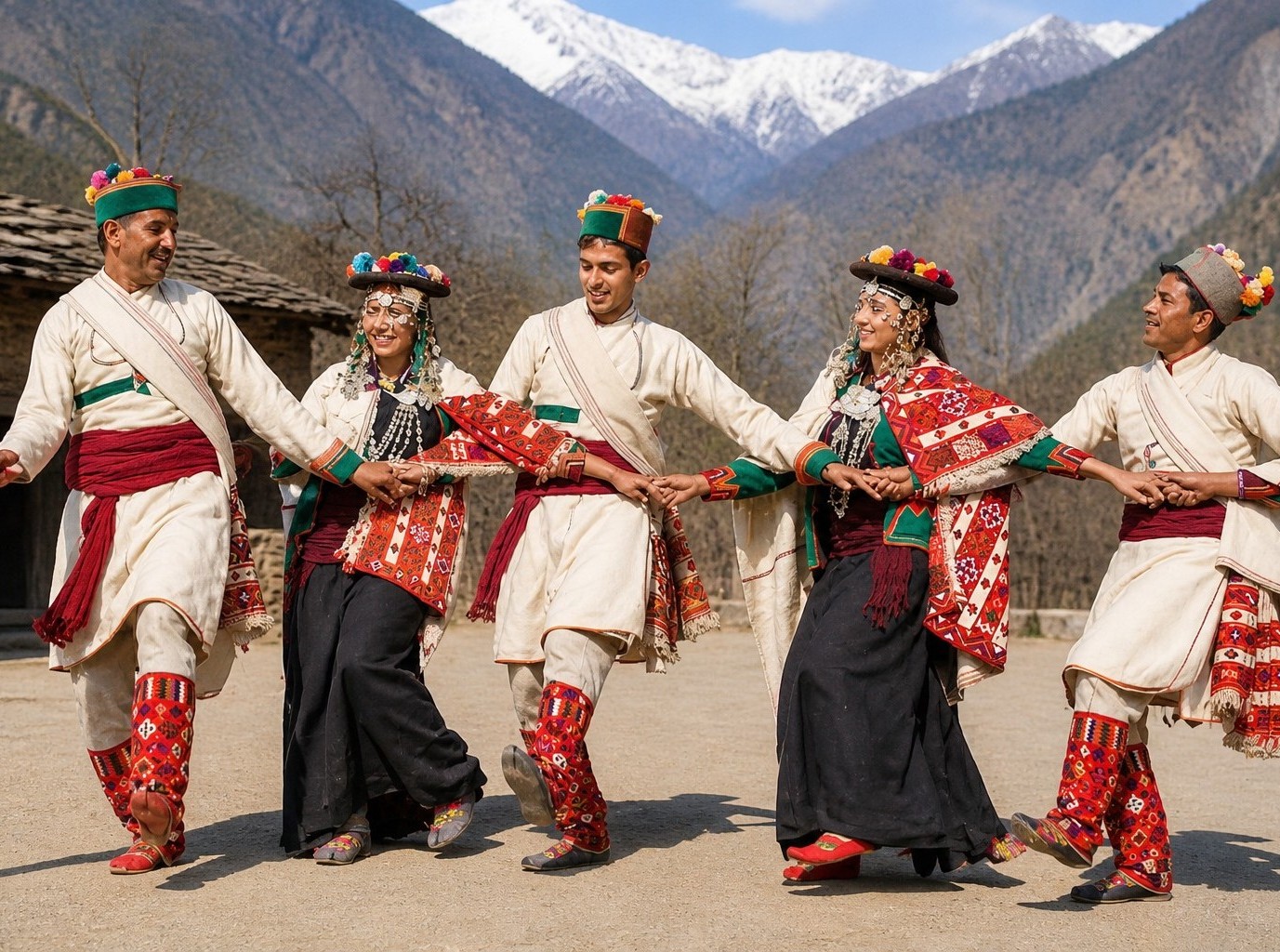
Nati is the beloved folk dance of Himachal Pradesh, performed across the state during festivals, weddings, and community celebrations. Unlike many Indian folk dances with rapid movements, Nati is characterized by its slow, graceful tempo that mirrors the serene beauty of the Himalayan landscape.
The dance is performed in groups, with participants holding hands or linking arms to form long chains or circles. Both men and women dance together, moving in synchronized steps that create mesmerizing patterns. The slow pace allows everyone - from children to elders - to participate, making it truly a community celebration.
Kullu Nati, performed during the famous Kullu Dussehra festival, holds the Guinness World Record for the largest folk dance, with thousands of participants dancing in unison. This remarkable achievement highlights the cultural significance and widespread popularity of this beautiful dance form.
Key Components
Chain Formation
Dancers hold hands or link arms in long chains
Slow Movements
Graceful, measured steps in harmony with nature
Circular Patterns
Groups move in circles or serpentine formations
Karnal
Long brass trumpet providing deep notes
Dhol
Traditional drum maintaining rhythm
Shehnai
Wind instrument for melodic accompaniment
Regional Variations
Kullu Nati
The most famous variant, performed during Dussehra
Kinnauri Nati
From the Kinnaur region, with distinct tribal elements
Sirmauri Nati
From Sirmour district, slightly faster tempo
Mahasu Nati
Traditional form from the Mahasu region
Traditional Costume
Women's Attire
- Pattoo: Traditional woolen dress
- Dohru: Colorful headscarf
- Choli: Embroidered blouse
- Silver Jewelry: Traditional ornaments
- Shawl: Himachali woolen shawl
Men's Attire
- Chola: Long coat-like garment
- Churidar: Fitted trousers
- Himachali Topi: Traditional cap
- Patka: Waist sash
- Dora: Woolen belt
Cultural Significance
Nati is more than just a dance - it is a symbol of community bonding and cultural identity in Himachal Pradesh. The dance reinforces social connections as people from all walks of life join hands and move together in harmony.
During the Kullu Dussehra festival, the world's longest Nati chain forms on the banks of the Beas River, with participants dressed in traditional finery. This spectacular event attracts visitors from around the world and demonstrates how folk traditions continue to thrive in modern times.