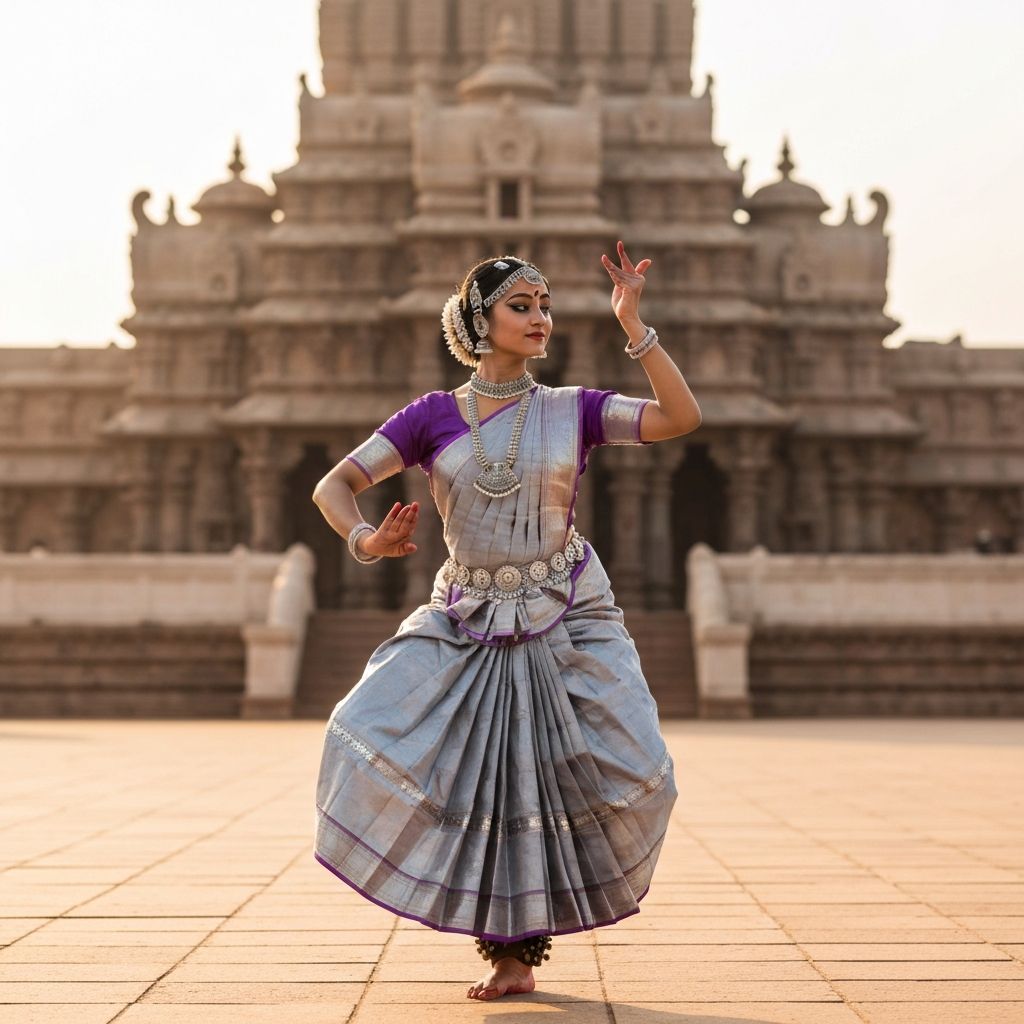
Odissi
Temple sculptures come alive - the lyrical dance poetry of Odisha.
Origin
Odisha
History
2000+ Years
Music
Odissi Classical
Inspiration
Temple Sculptures
Odissi is one of the oldest surviving classical dance forms of India, originating in the temples of Odisha over 2000 years ago. Archaeological evidence from the Udayagiri caves (2nd century BCE) and the stunning sculptures of Konark Sun Temple showcase the antiquity of this dance form.
The dance is characterized by its fluid, lyrical movements and the distinctive tribhanga (three-bend) posture, creating an S-shaped curve that mirrors the poses seen in Odishan temple sculptures. This interplay between sculpture and dance is unique to Odissi.
Originally performed as a devotional offering in temples, Odissi was revived in the mid-20th century by gurus like Kelucharan Mohapatra, who reconstructed the dance from temple carvings and the traditions of the Gotipua dancers and Maharis (temple dancers).
Key Elements
Tribhanga
Three-bend posture deflecting body at neck, torso, and hips
Chauka
Square stance symbolizing Lord Jagannath
Bhangis
Sculptural poses inspired by temple carvings
Abhinaya
Expressional dance conveying emotions
Pallavi
Pure dance elaboration of a raga
Mangalacharan
Opening invocation to the deity
The Odissi Costume
- Pata Saree: Distinctive pleated silk saree in vibrant colors
- Silver Jewelry: Traditional Odishan silver ornaments
- Tahia: Crown-like headpiece with peacock feather
- Alta: Red dye on palms and feet