Patola
The rarest double ikat silk from Patan, Gujarat — where warp and weft are both tie-dyed before a single thread is woven.
Origin
Patan, Gujarat
History
700+ Years
Technique
Double Ikat Weaving
Recognition
GI Tagged (2013)
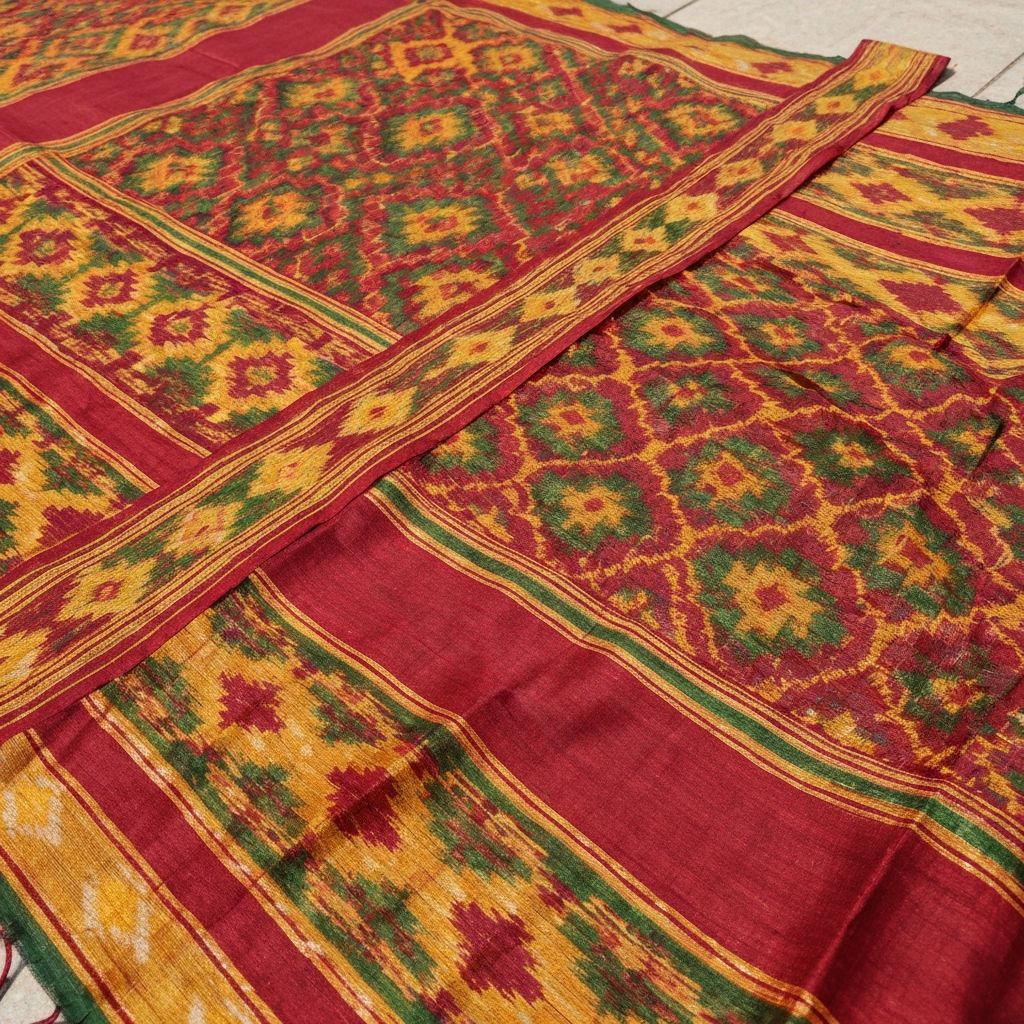
Among the world's most technically demanding textiles, Patola stands in a category of its own. Originating in the ancient city of Patan — once the capital of the Solanki dynasty in Gujarat — these double ikat silk sarees require both the warp (vertical) and weft (horizontal) threads to be separately tie-dyed in precise patterns before a single pass of the shuttle begins. The alignment of both sets of threads during weaving must be mathematically exact; there is no room for error, and there is no way to undo a mistake.
A single Patola saree can take anywhere from six months to a full year to complete. The dyeing alone — using traditional natural dyes derived from pomegranate, harda, and indigo — requires multiple rounds of tying, dyeing, untying, and re-tying tiny segments of thread, each binding creating a precise resist that will become part of the finished pattern.
The result is a saree that is fully reversible — the same vivid, sharp-edged pattern appears on both faces of the fabric. This visual perfection and the sheer labour involved have made authentic Patan Patola sarees among the most expensive handwoven textiles in India, with fine pieces fetching several lakhs of rupees.
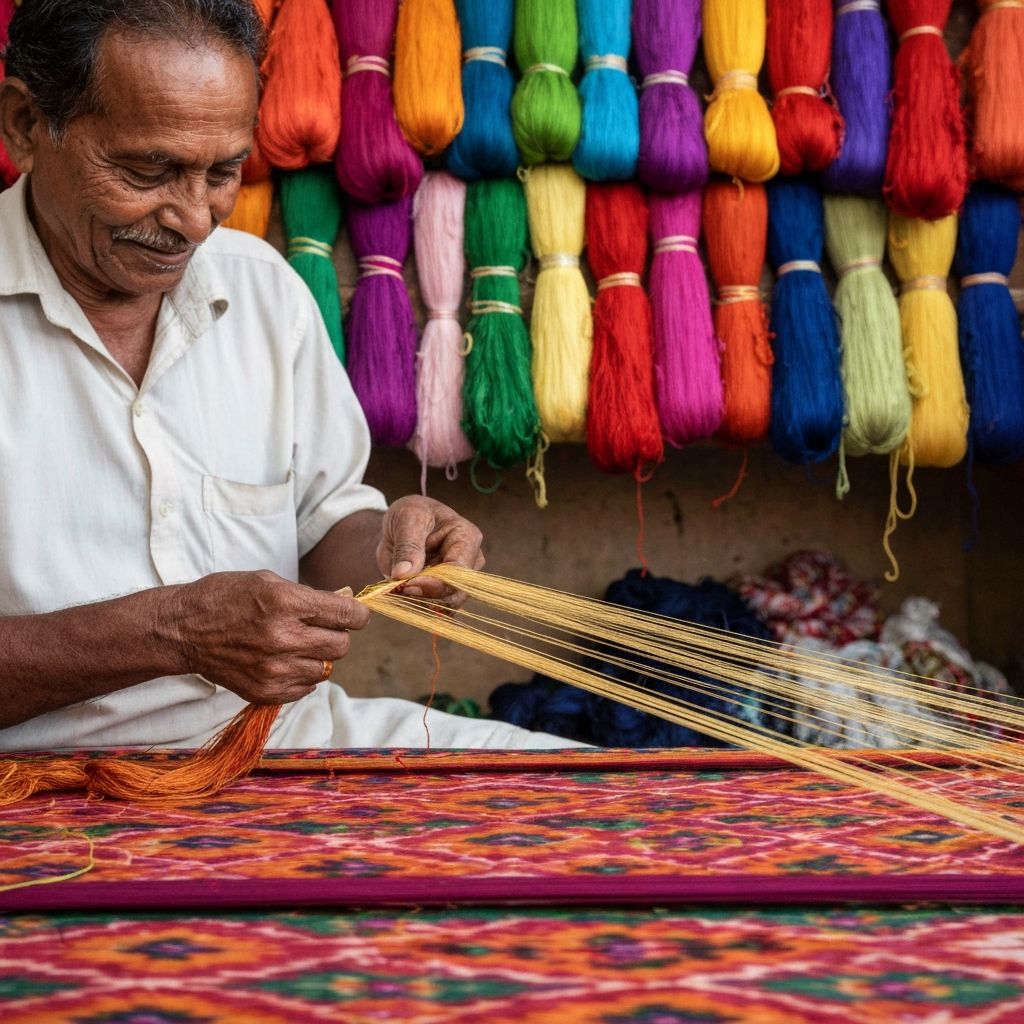
The intricate tie-dyeing of silk threads — the most labour-intensive step in Patola weaving
Distinctive Features
Double Ikat
Both warp and weft threads are individually tie-dyed before weaving
Perfect Registration
Pattern aligns perfectly on both sides — the fabric is reversible
Pure Silk
Fine mulberry silk with vibrant, light-fast natural dyes
6–12 Months to Weave
A single saree requires a year of meticulous work
No Mistakes Possible
Threads are pre-dyed; errors cannot be corrected once weaving begins
Royal Heritage
Worn by royalty across Gujarat, Rajasthan, and Southeast Asia
Patan vs. Rajkot Patola
Rajkot Patola
Single ikat, only weft threads are tie-dyed; less expensive and more accessible
Patan Patola
True double ikat; both warp and weft dyed — rarer and vastly more complex
Guardians of the Craft
The Salvi Family
Only three Salvi families in Patan continue the Patola double ikat tradition today. The craft has been passed father-to-son for over 700 years, with techniques so guarded they were never written down.
Royal Patronage
Patola sarees were mandatory bridal gifts in royal Gujarati families. They were also traded as precious commodities across maritime routes to Indonesia and Sri Lanka, where they were used in sacred ceremonies.
Traditional Motifs
Identifying an Authentic Patola
- Both sides of the saree show the same sharp, clear pattern — a hallmark of true double ikat
- Look for the GI tag; Patan Patola sarees must be registered and certified
- Authentic pieces use natural dyes — colours are vibrant but have a muted depth unlike synthetic dyes
- The fabric feels light yet substantial; pure silk with a cool, smooth hand
- Beware of machine-printed imitations sold under the Patola name — always buy from certified Patan weavers or trusted emporiums