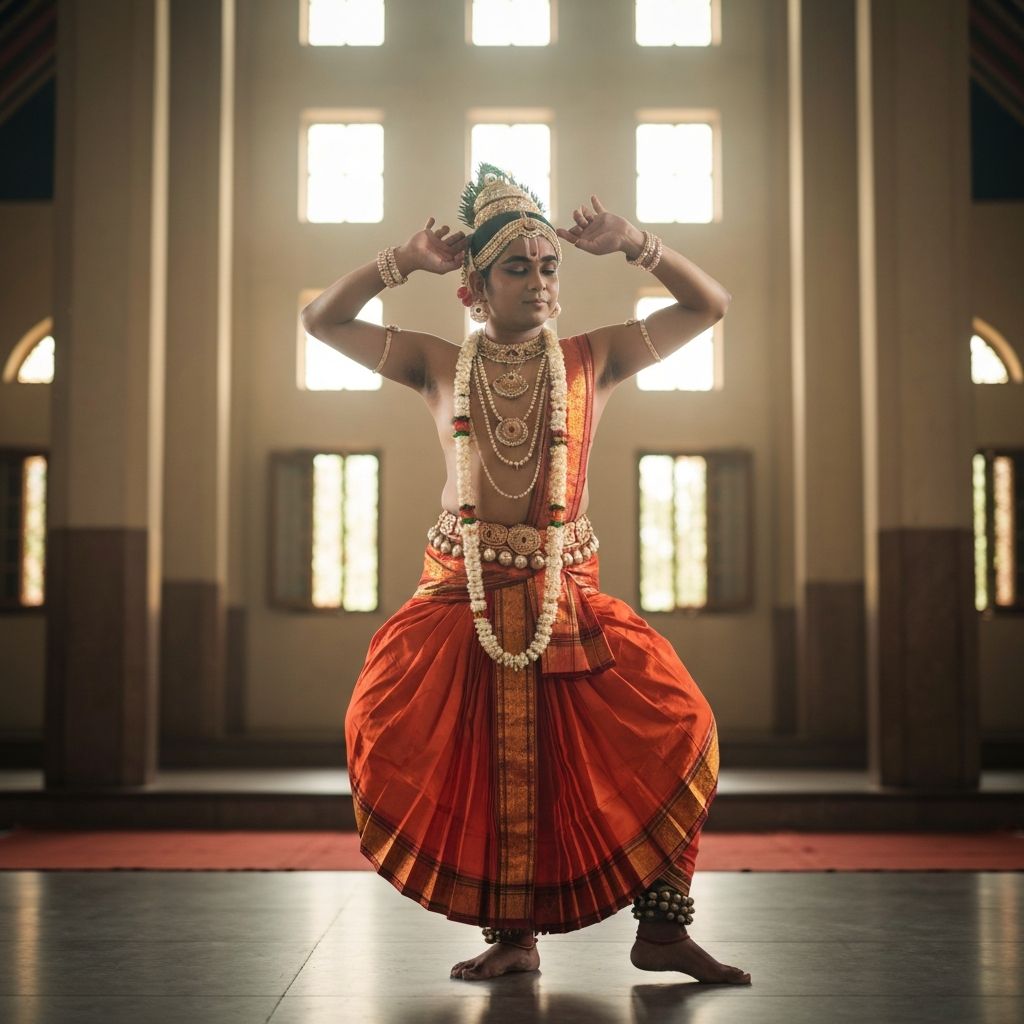
Sattriya
Born in monasteries, blessed by devotion - Assam's gift of sacred movement.
Origin
Assam
History
15th Century CE
Music
Borgeet & Ankiya Nat
Recognition
2000 by Sangeet Natak Akademi
Sattriya is a classical dance tradition that originated in the Vaishnavite monasteries (sattras) of Assam in the 15th century. It was created by the saint-scholar Srimanta Sankaradeva and his disciple Madhavdeva as a powerful medium to propagate the Bhakti movement and Vaishnavite faith in northeastern India.
For centuries, Sattriya remained confined to the sattras, performed exclusively by male monks called bhokots as part of their daily worship. It wasn't until the mid-20th century that the dance form moved beyond the monastery walls, and women began to participate. In 2000, it gained recognition as India's eighth classical dance form.
The dance form is characterized by a harmonious blend of mythological drama, devotional music, and graceful movements. Every aspect - from the invocatory Gayan-Bayan to the dramatic Ankiya Nat - is designed to evoke bhakti (devotion) and create a spiritual experience for both performers and audience.
Repertoire
Gayan-Bayan
Devotional singing with musical accompaniment
Ojapali
Narrative performance combining dance and storytelling
Bhortal Nritya
Dance with large cymbals
Sutradhari Nritya
Solo introductory dance
Gopi Pravesh
Entry of the Gopis
Krishna Nritya
Dance depicting Krishna's divine play
What Makes Sattriya Unique
Monastic Origins
Unlike other classical forms, Sattriya was created within the monastic institutions (sattras) of Assam and was originally performed only by male monks (bhokots) as a form of worship.
Neo-Vaishnavism
The dance form is deeply rooted in the Bhakti movement, specifically the neo-Vaishnavite tradition established by Srimanta Sankaradeva in the 15th century.
Ankiya Nat
Sattriya evolved from Ankiya Nat, one-act plays written by Sankaradeva depicting episodes from Krishna's life, performed in sattras.
Traditional Attire
Performers wear distinctive Assamese attire including dhoti-chadar for men and mekhela-chadar for women, often with the traditional gamosa.
Srimanta Sankaradeva's Legacy
- Borgeet: Devotional songs composed by Sankaradeva sung in ragas
- Ankiya Nat: One-act plays depicting episodes from Krishna's life
- Sattras: Monastic institutions that preserve and practice Sattriya traditions
- Eka Sarana Nama Dharma: The neo-Vaishnavite philosophy that forms the spiritual foundation
- Khol: Traditional drum that provides the rhythmic foundation