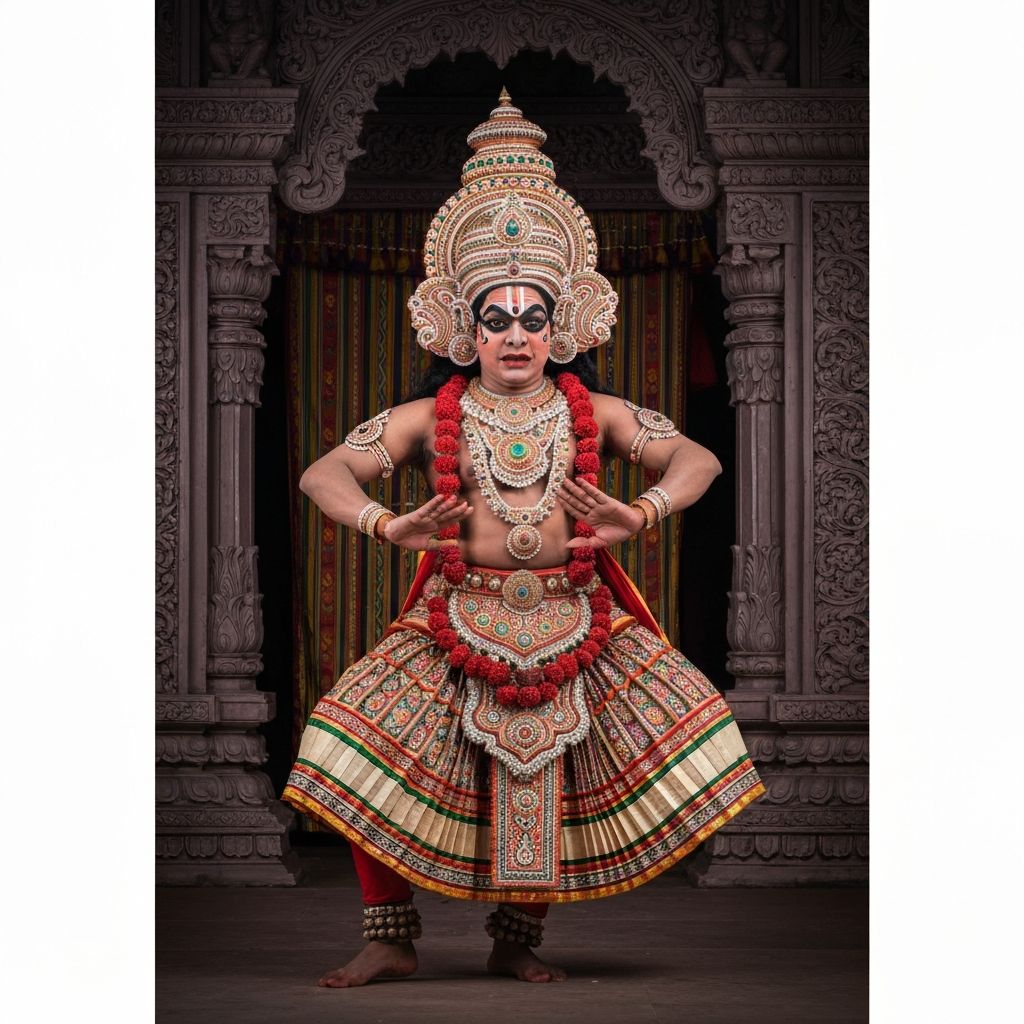
Yakshagana
The night-long spectacle of Karnataka, where gods and demons dance under starlit skies.
Origin
Karnataka (Coastal)
Era
16th Century
Music
Chande, Maddale
Duration
Dusk to Dawn
Yakshagana is the magnificent traditional theater form of Karnataka's coastal region, combining dance, music, dialogue, and elaborate costumes to bring mythological stories to life. The name literally means 'song of the Yakshas' (celestial beings), and the art form delivers a truly celestial experience.
Traditional Yakshagana performances begin at dusk and continue until dawn, with stories drawn from the great Indian epics - Ramayana, Mahabharata, and the Puranas. The performers wear towering headgear (Kirita), dramatic makeup, and costumes that can weigh up to 30 kilograms, yet they dance with remarkable agility and expressiveness.
The art form exists in two major styles: Tenkutittu (southern style) and Badagutittu (northern style), each with distinct musical and performance traditions. Yakshagana troupes (melas) travel from village to village, performing in open grounds, making it a truly community-centered art form.
Key Components
Vesha
Elaborate costumes with towering headgear
Chande
Drum that provides the powerful rhythm
Maddale
Double-headed drum for melodic support
Bhagavatha
Lead singer who narrates the story
Himmela
The musical ensemble
Mummela
The stage performance team
Character Types
Rajavesha
Royal characters in magnificent attire
Streevesha
Female characters, often played by men
Bannada Vesha
Colorful demon or forest character
Pundu Vesha
Comic characters for relief
The Night Performance
- Poorvaranga: Preliminary rituals and invocatory performances
- Prasanga: The main story performance through the night
- Oddolaga: Grand entrance of the main character
- Mangala: Auspicious conclusion at dawn