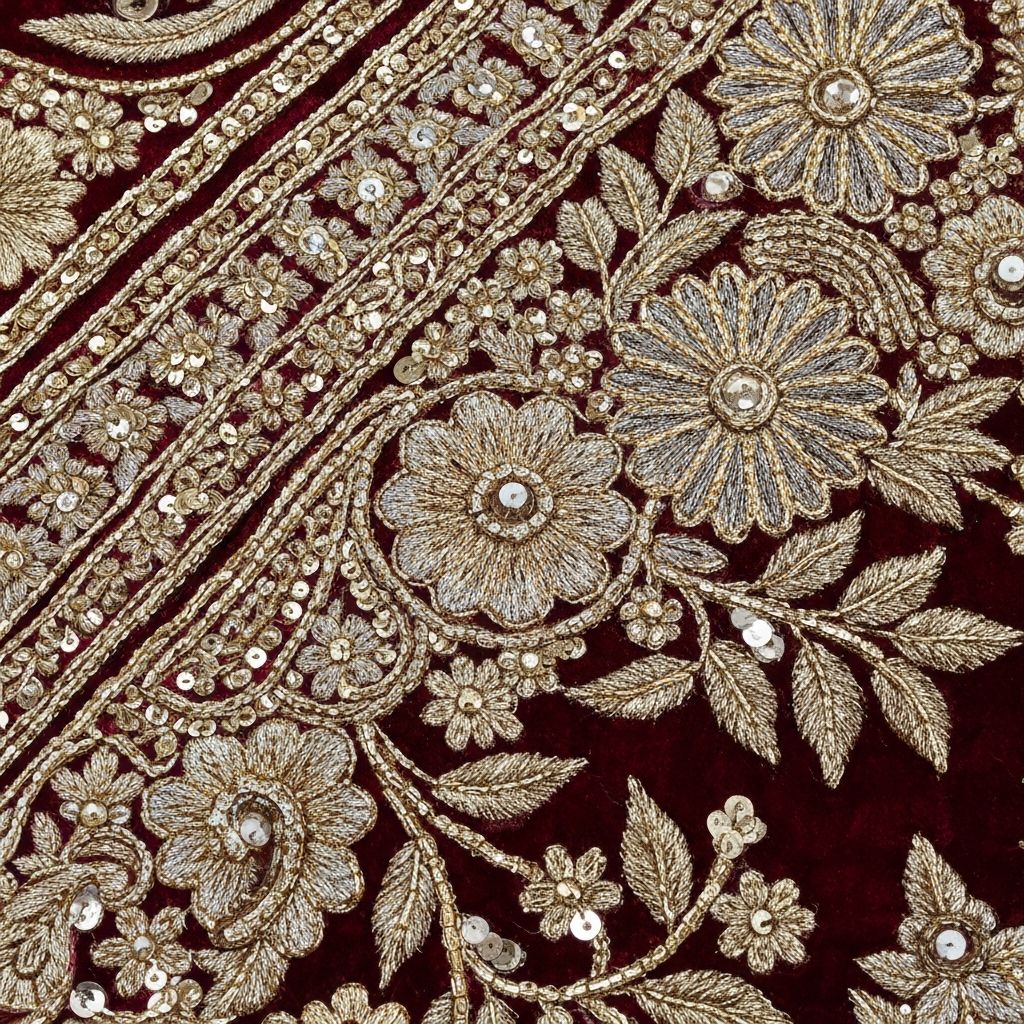
Zardozi
Heavy gold and silver thread embroidery fit for royalty — a Mughal legacy of unparalleled opulence.
Centers
Lucknow, Hyderabad, Delhi
History
500+ Years (Mughal Era)
Technique
Adda Frame & Needle
Recognition
GI Tagged (Lucknow)
Zardozi — from the Persian "zar" (gold) and "dozi" (embroidery) — is the art of stitching with gold and silver threads, often embellished with pearls, beads, and precious stones. Introduced to India by Persian craftsmen during the Mughal era, it quickly became the preferred adornment for royal courts, adorning everything from the emperor's robes to elephant caparisons and palace hangings.
At its peak under Emperor Akbar, over 4,000 zardozi workshops flourished in the royal karkhanas of Agra, Delhi, and Lahore. Master craftsmen — known as "karigars" — worked under royal patronage, creating pieces so heavy with gold that they required multiple attendants to hold them up. The Peacock Throne itself featured extensive zardozi work.
Today, Lucknow remains the heart of zardozi, where generations of Muslim karigars have preserved techniques passed down since the 16th century. While pure gold threads have largely given way to gold-plated copper (badla), the artistry and dedication remain unchanged — a single bridal lehenga can take months to embroider.
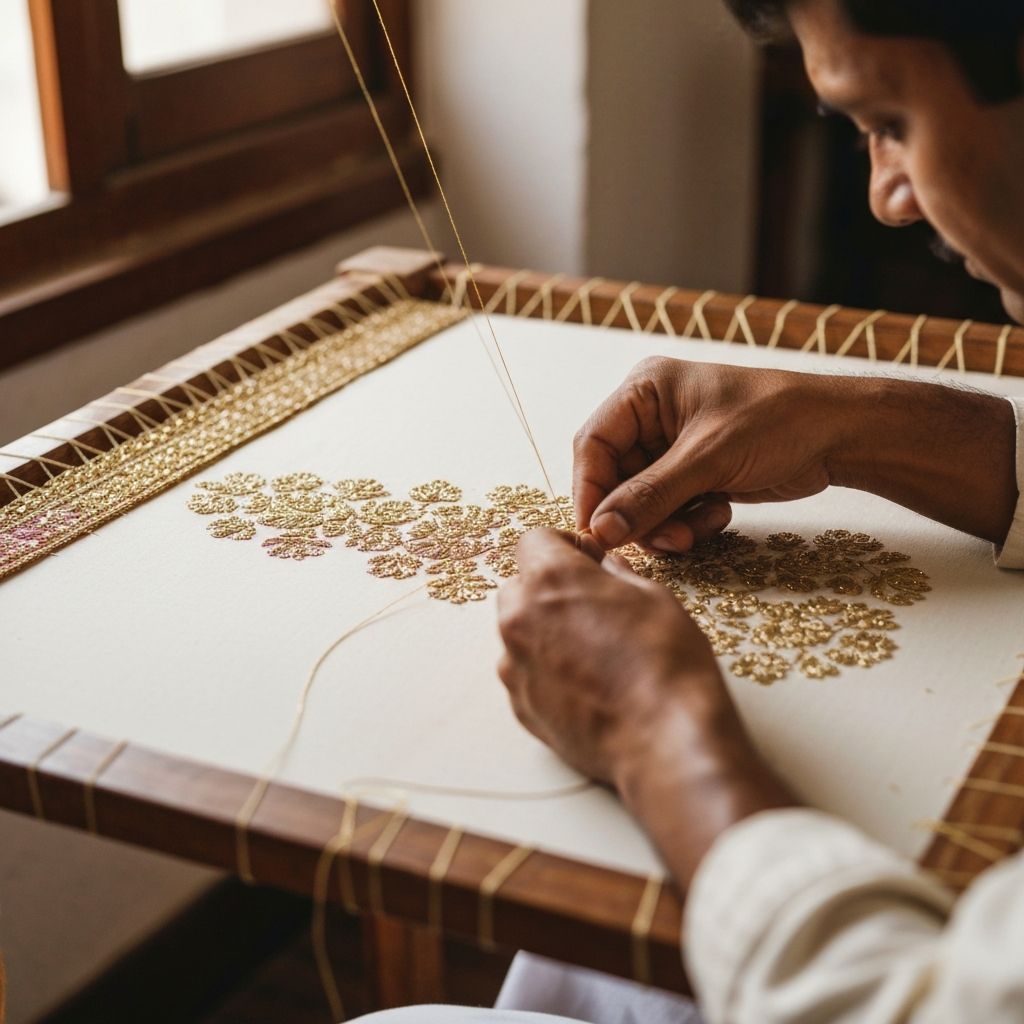
A master karigar stitching zardozi on a stretched adda frame in Lucknow
Distinctive Features
Gold & Silver Threads
Real metallic threads (zari) twisted around silk core for durability and shine
Adda Frame Technique
Fabric stretched on wooden frame while artisans stitch from above
3D Embossed Work
Padding underneath creates raised, sculptural patterns
Sequins & Stones
Embellished with mukaish, sitara, and precious/semi-precious stones
Heavy Drape
The weight of metallic work gives garments a regal fall
Mughal Motifs
Florals, paisleys, arabesques, and hunting scenes from Persian tradition
Varieties of Metallic Embroidery
Karchob
The heaviest form with thick zari threads creating raised patterns
Kamdani
Flat embroidery using thin beaten gold/silver wire for delicate work
Tilla
Silver thread work popular in Kashmir and Punjab
Gota
Applique of gold/silver ribbons creating geometric patterns
Mukaish
Tiny metal pieces sewn flat, creating a glittering effect
Dabka
Coiled wire stitched to form textured, spring-like patterns
Traditional Motifs
Caring for Zardozi
- Store flat or rolled (never folded) to prevent creasing and thread breakage
- Wrap in muslin or acid-free tissue — plastic traps moisture and causes tarnishing
- Dry clean only at a specialist familiar with metallic embroidery
- Avoid direct contact with perfume, deodorant, and moisture
- Air out occasionally in shade to prevent mustiness without sun damage