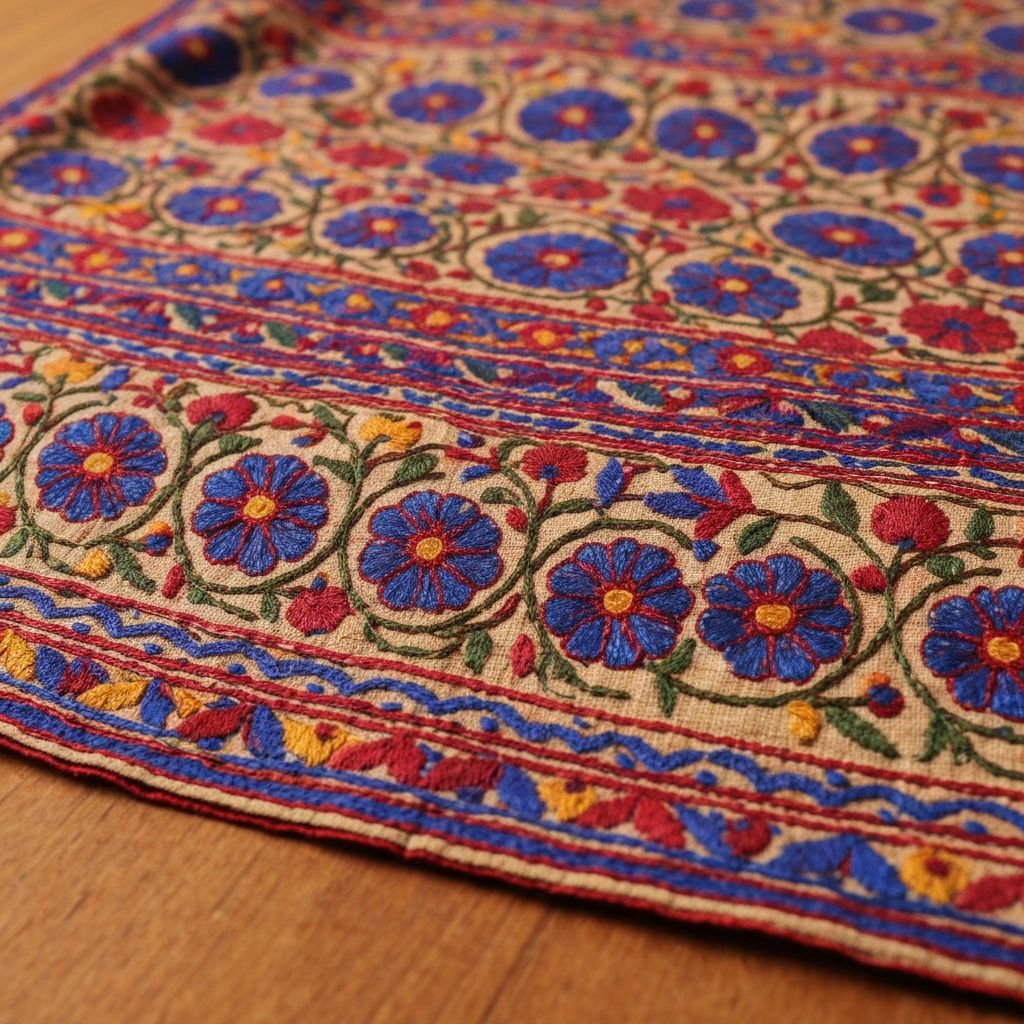
Phulkari
Punjab's vibrant flower embroidery, where every stitch blooms with color and tradition.
Origin
Punjab
History
15th Century onwards
Technique
Darning Stitch
Thread
Pat (Silk Floss)
Phulkari, meaning "flower work," is Punjab's signature embroidery tradition where women transform simple cotton fabric into gardens of silk flowers. This folk art has been an integral part of Punjabi culture for centuries, marking every important occasion in a woman's life.
Unlike most embroidery where patterns are created on the front, Phulkari is worked from the reverse side using long and short darning stitches. This unique technique creates a dazzling effect where the silk thread covers almost the entire surface, making the fabric shimmer with color.
Traditionally, mothers and grandmothers would start embroidering Phulkari pieces for girls from their birth, completing elaborate shawls by the time they were married. These heirloom pieces carried blessings and love across generations.
Types of Phulkari
Bagh
Garden design covering entire fabric with embroidery
Chope
Red phulkari given to brides by maternal grandmother
Suber
Wedding shawl with golden-yellow base
Thirma
White base with colorful embroidery for older women
Darshan Dwar
Depicts temple doors and religious motifs
Sainchi
Illustrates village life and folk tales
Cultural Significance
Phulkari is deeply woven into Punjabi ceremonies and celebrations, from birth to marriage to harvest festivals.
- Essential part of a bride's trousseau
- Worn during Lohri, Baisakhi, and other festivals
- Symbolizes prosperity, fertility, and good fortune